Inaugural Visit: An Art Historian in Athens
During my brief visit to Athens, I encountered Byzantine treasures, happy chances, a vibrant city, and an art historian’s wishes fulfilled. Join me as I take you through my first visit to the Greek capital.
(All photos are copyrighted, belonging to the author Maie El-Hage)
Europe is always a great destination for the Spring. For my April 2026 vacation, I chose to spend two days in Athens; it also happened to my first visit to Greece, but definitely not the last. As a Byzantinist and art historian, this visit fulfilled some of my intellectual longings; to encounter Byzantine architecture AND artefacts in their original contexts. I also got the chance to experience the vibe of the city, its urban fabric, its lovely and hospitable people, and destinations I know I want to visit on my next trip here.
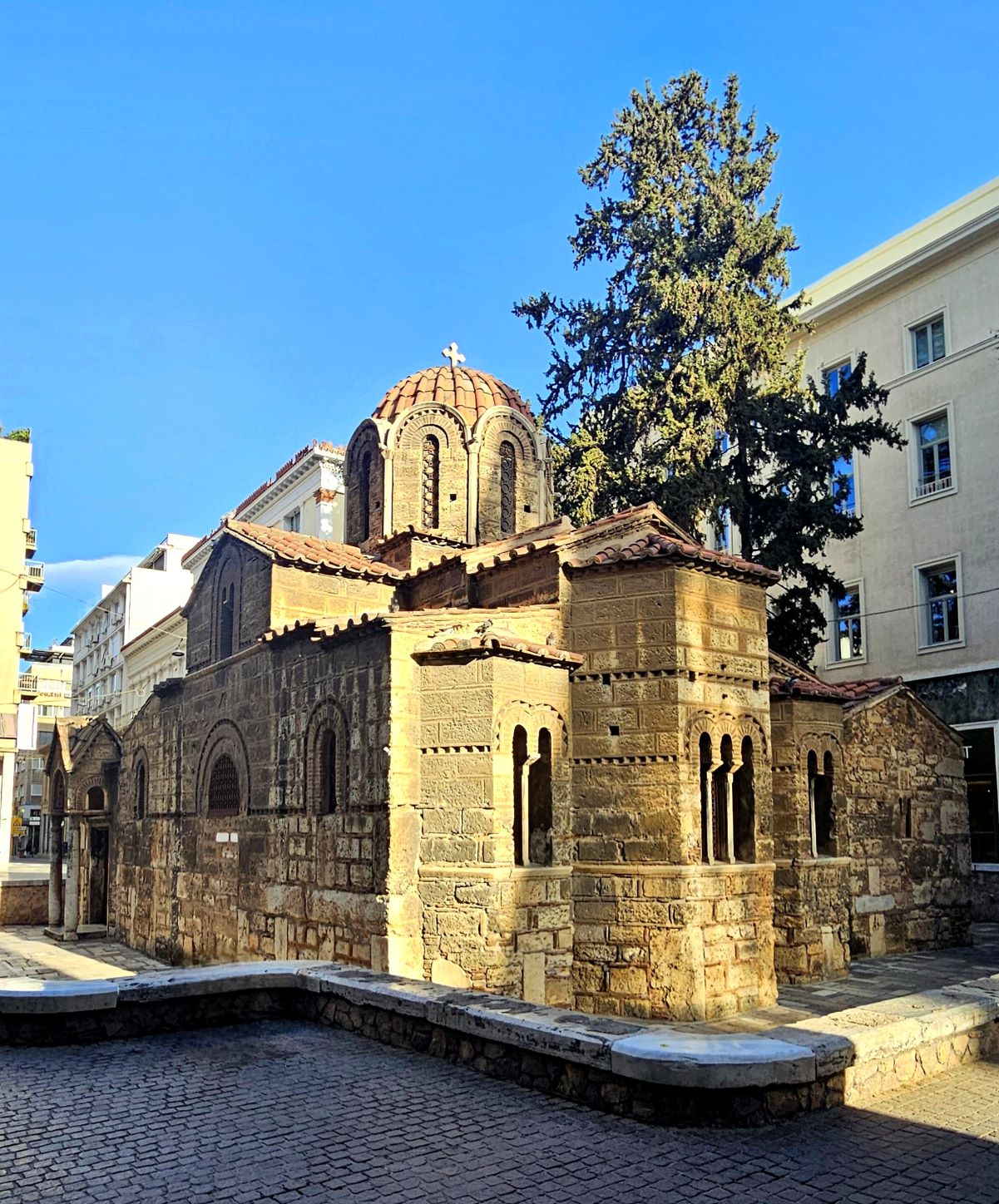
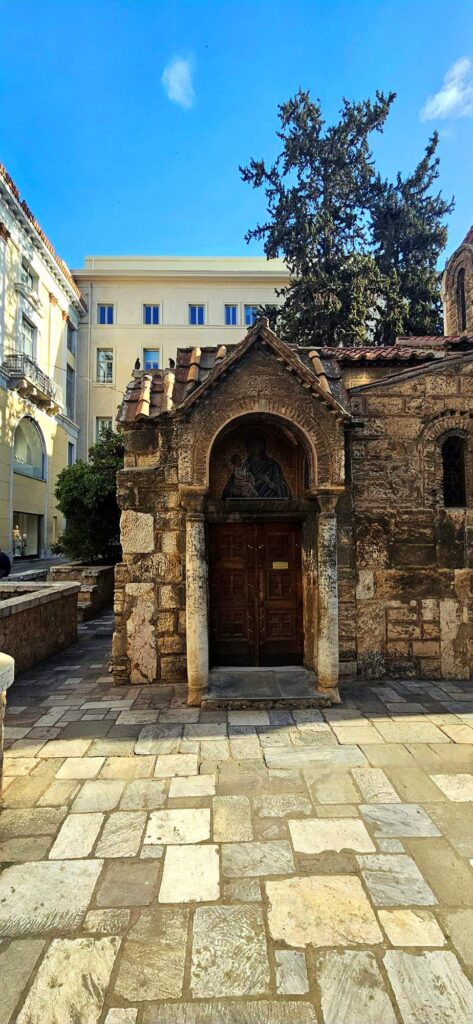
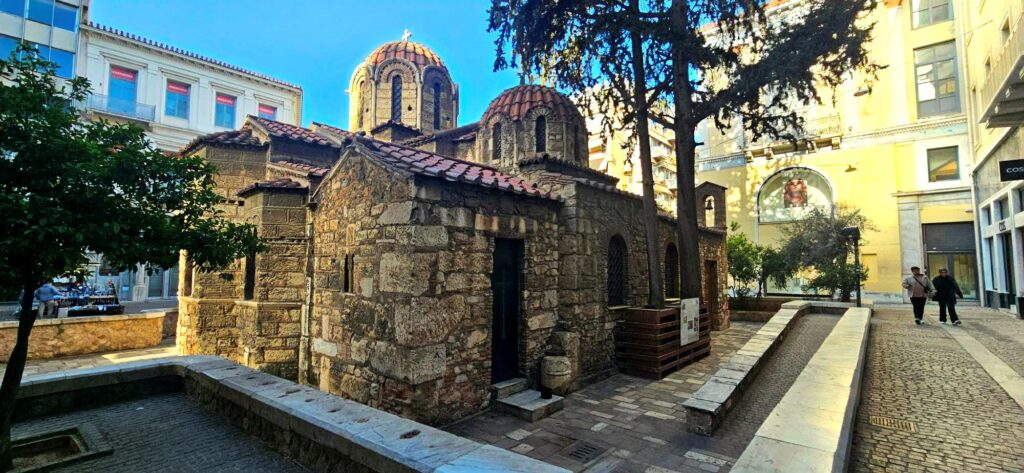
Church of Panagia Kapnikarea as seen from Street vista (photo copyright belongs to the author)
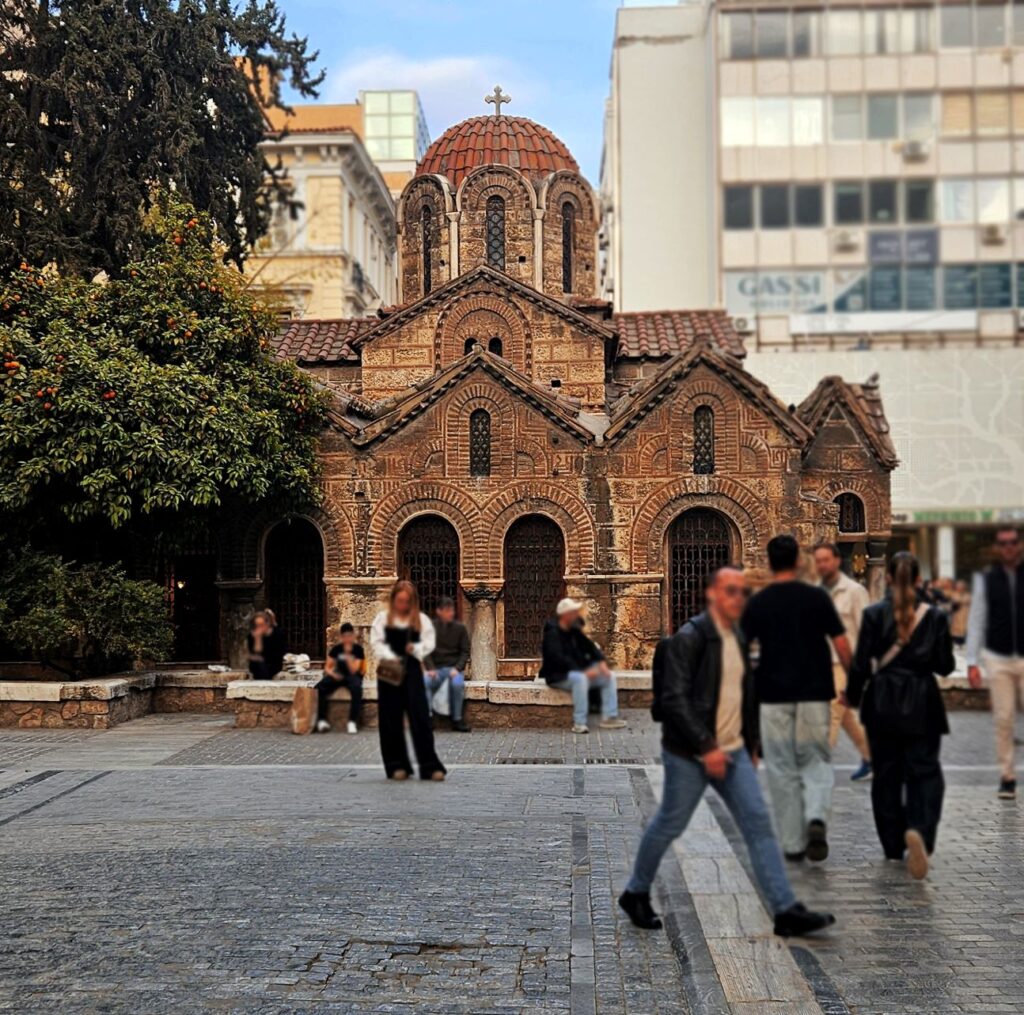
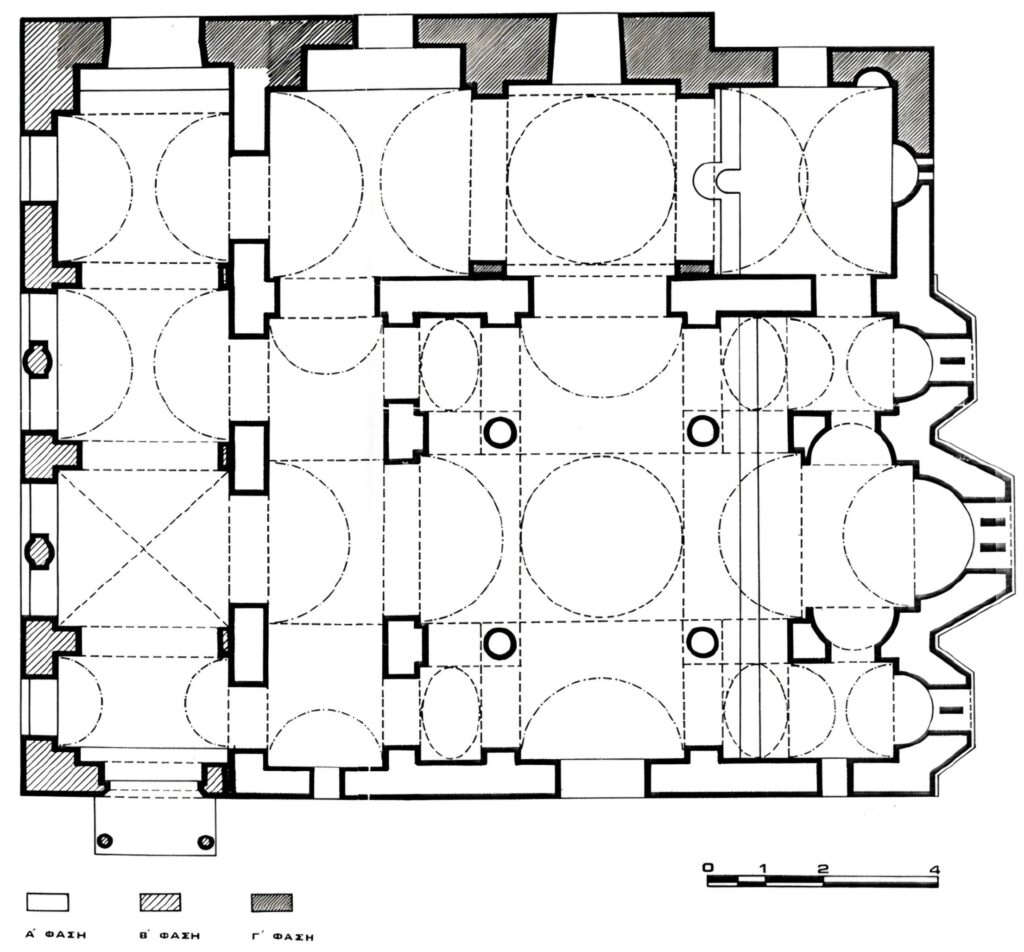
The Kapnikarea monument, also known as the Church of Panagia Kapnikarea, is an 11th century Byzantine structure, situated in the heart of Ermou street in Plaka; today a frequented shopping area. It is one of the oldest continuously-used churches in Athens. As per the plan, it is a cross-in-square church, typical of the Middle Byzantine era, with a chapel added later to the northern side, and an exonarthex added to the west side. Photography inside was forbidden, so I documented as much as I could of the exterior.
Floor plan of Kapnikarea Church, copyright belongs to ResearchGate, link here.
Inside there is a plaque explaining the history of this church. Apparently the name ‘kapnikarea’ derives from the church’s founder who was associated with the ‘smoke tax’ – ‘kapnos’ means smoke in Greek. The smoke tax was imposed on buildings by the Byzantines. In the 19th century, the church was to be demolished for town-planning purposes; however, it was saved because of the intervention of Louis I of Bavaria who was the father of King Othon of Greece. [Source: text mounted inside the church].
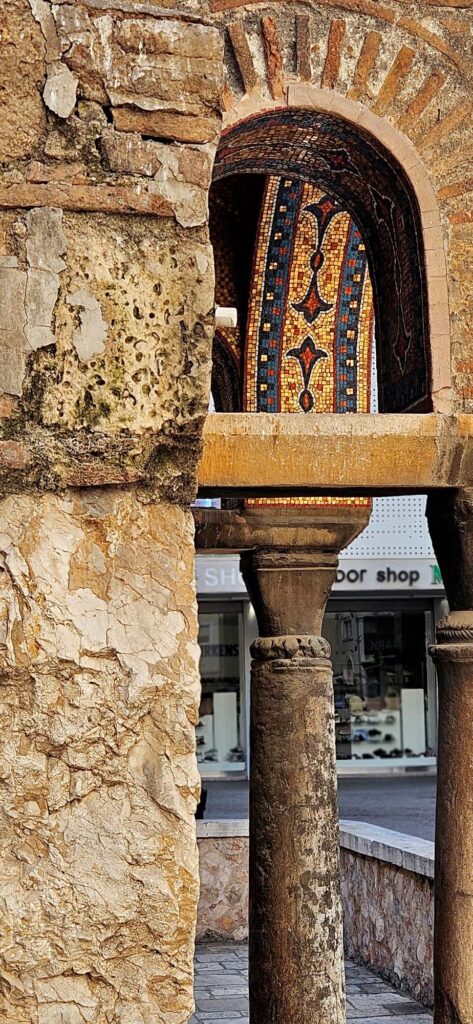
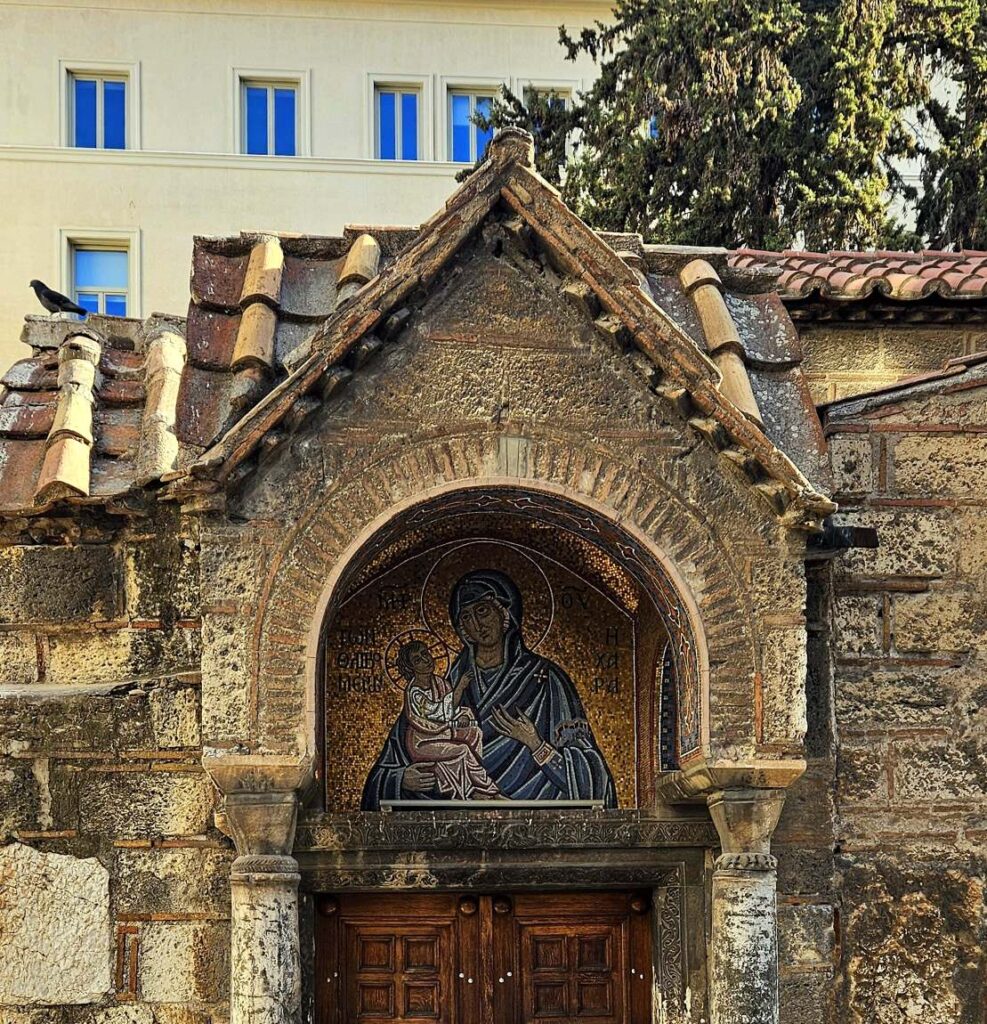
I found the church to be quite charming. On the outside, there is a beautiful Theotokos mosaic above the south portico. There are quite a lot of mosaic details in the soffits of the arches as well; these are made with glass and stone tesserae. The golden tesserae are pieces of gold leaf sandwiched between two glass pieces. The level of intricacy is quite impressive, especially that they have lasted a little under a millennium. I was also impressed by the urban context. The church is visible from the street’s vista. In its surrounding, the nearby floor level is much higher than the church’s level; that’s why ramps have been placed for circulation. It is natural that, over time, the nearby street levels rose due to sedimentation. Furthermore, the juxtaposition of the city’s Byzantine history with the contemporary activities of shopping and commerce brings a certain aura of beauty, and charm, to the city.
Mosaic detail in the soffit, Kapnikarea church Athens (photo copyright belongs to the author)
Theotokos Mosaic over the South portico of Kapnikarea church, Athens (photo copyright belongs to the author)
Detail of the Theotokos mosaic above the South portico of Kapnikarea church, Athens (photo copyright belongs to the author)
The urban context of the Kapnikarea church, Athens (photo copyright belongs to the author)
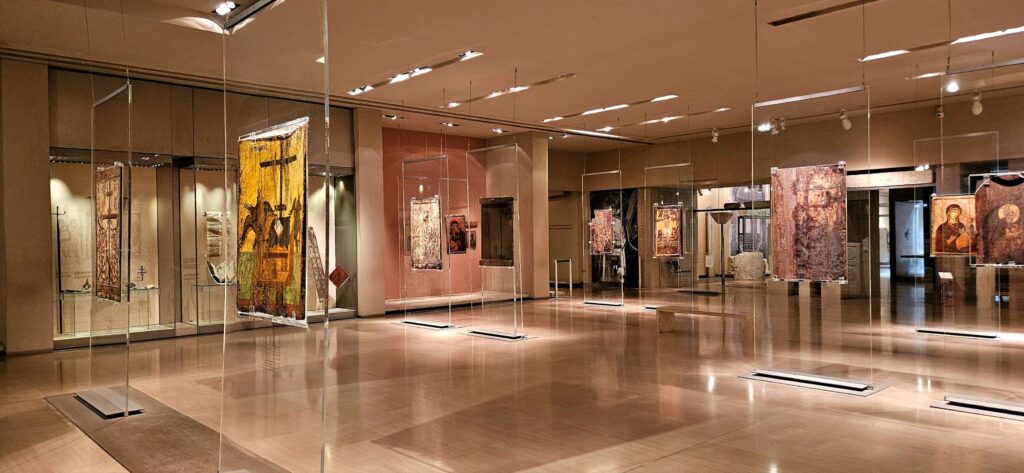
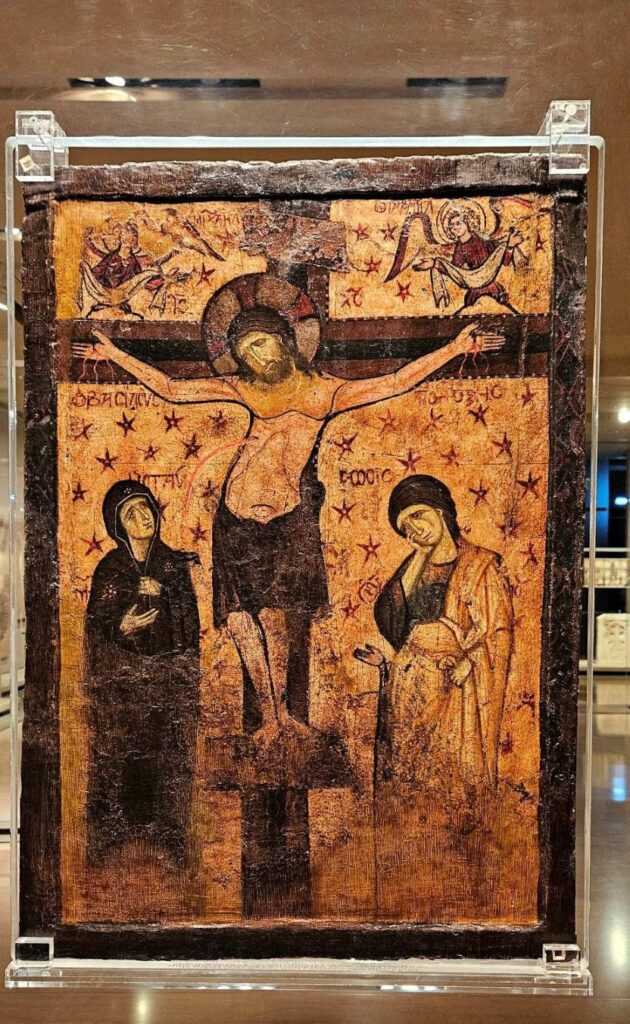
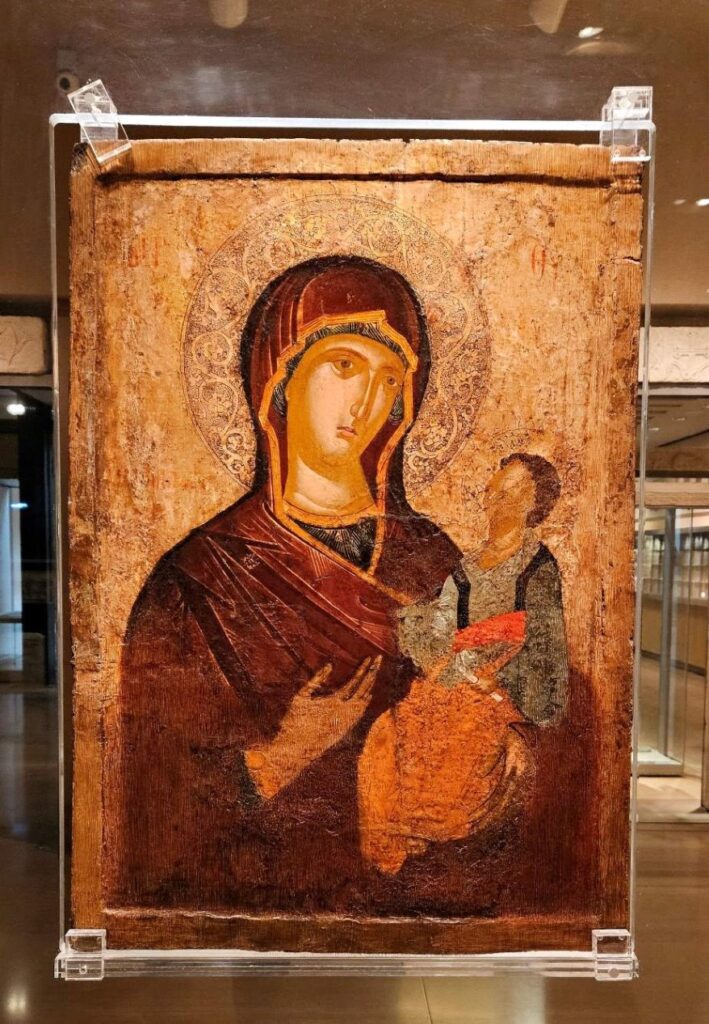
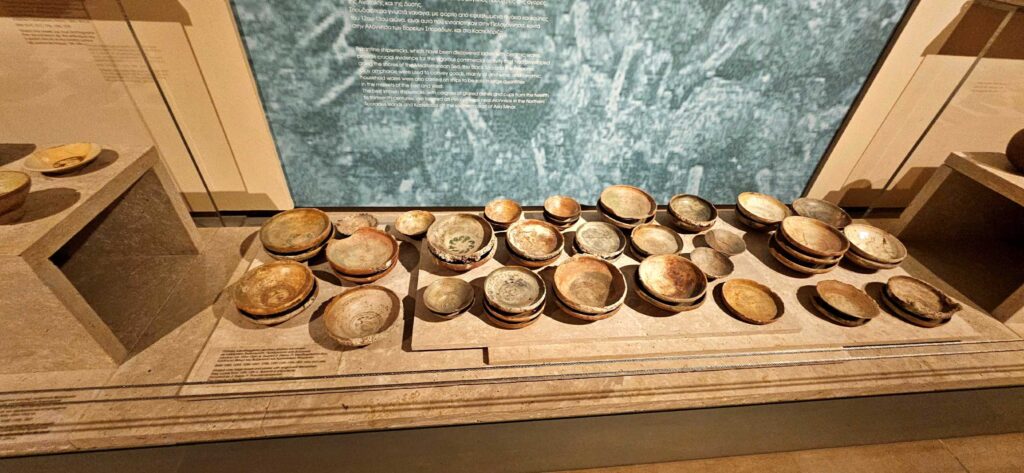
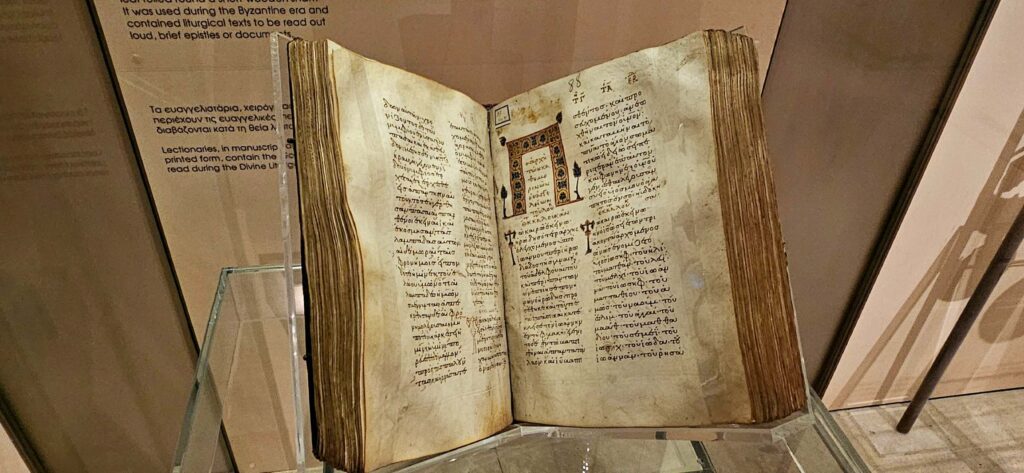
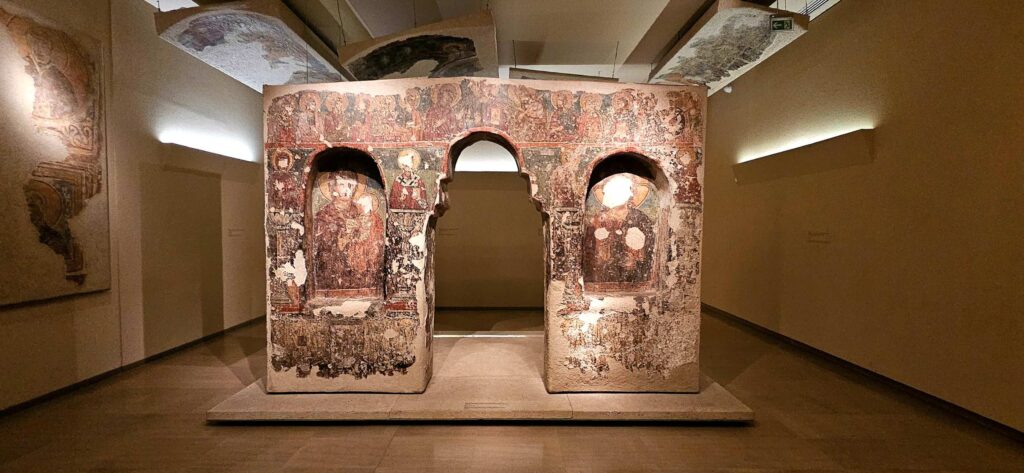
The following stop was the Byzantine and Christian Museum (yes, I saved my visit to the Acropolis Museum for my next trip). This visit was everything I hoped it would be; informative, enlightening, enriching and inspiring. I wanted to learn more, to see everything; all the artefacts, the jewelry, the pottery, the icons, the coins, and the structures. And I wasn’t disappointed. There were rooms full of icons, some double-sided; like the double-sided icon with the Crucifixion in the front and the Virgin Hodegetria in the back. The front features three different painting layers (9th, 10th and 13th centuries); the representation on the back dates from the 16th century. There were also ceramic wares, used in both households and in trade (mostly maritime trade). I loved the lectionary with Gospel passages in Byzantine Greek. There was even an entire masonry iconostasis, featuring the Great Deesis; Christ Pantokrator, the Virgin Hodegetria and the saints, dating from the 17th century. I spent 3 hours at that museum; I just absorbed the beauty and the knowledge.
Hall full of icons, Byzantine & Christian Museum, Athens
Crucifixion Icon, with layers from 9th 10th and 13th centuries, Byzantine & Christian Museum, Athens
Virgin Hodegetria Icon, 16th century, Byzantine & Christian Museum, Athens
Ceramic wares, Byzantine era, Byzantine & Christian Museum, Athens
Byzantine lectionary with Gospel passages in Byzantine Greek, Byzantine & Christian Museum, Athens
Masonry iconostasis at the Byzantine & Christian Museum, Athens
Athens is a vibrant city; the locals and the visitors are such a diverse group of people of all generations. I loved walking through the squares and the streets; live performances in both music and dance enliven the city. I had the chance to have a lovely lunch at MS Roof Garden.* This rooftop experience was just what I needed; I got away from the busy crowds and enjoyed the views to the Acropolis with an authentic Greek meal. There are many rooftop experiences like this to enjoy.
[*This is not an Ad.]
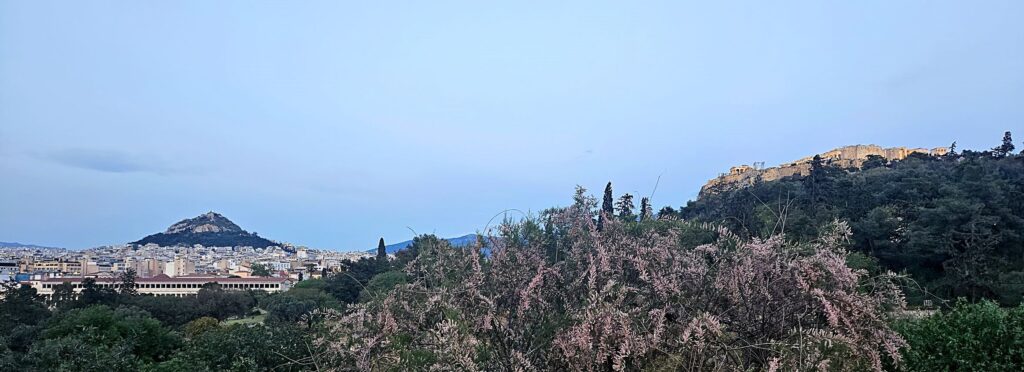
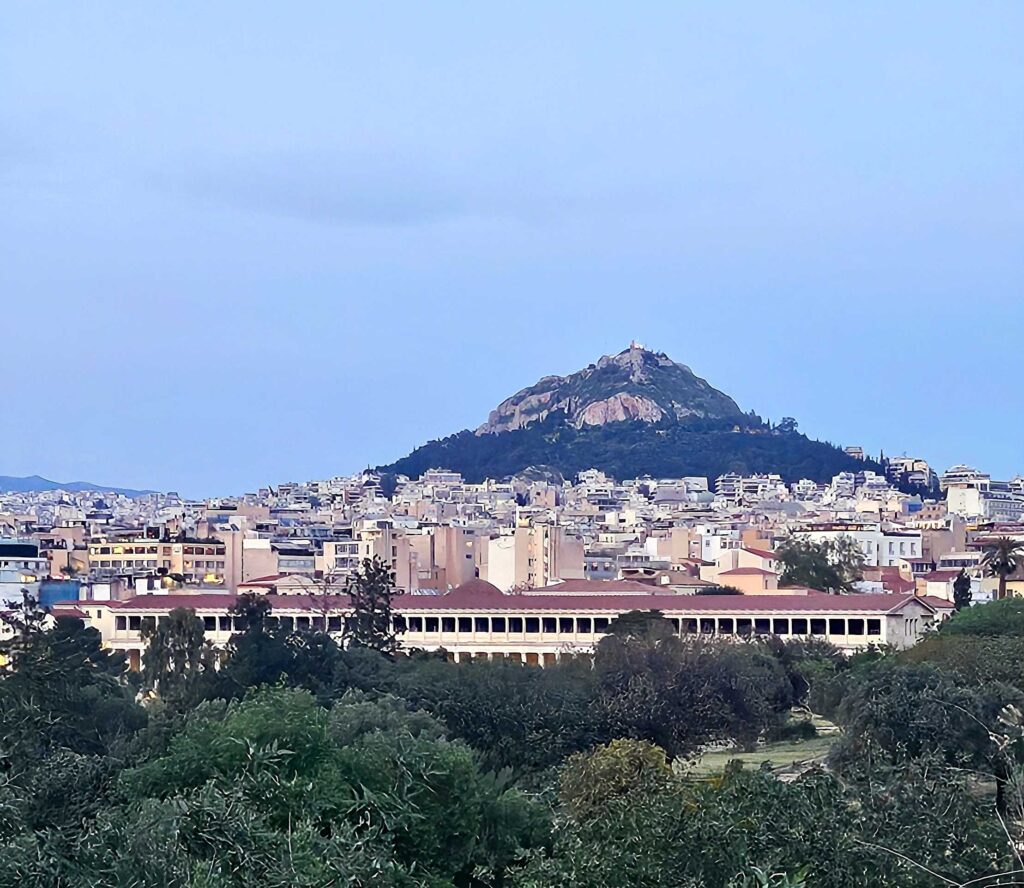
Observing the Acropolis from afar, I anticipated my next visit. I have to visit the monuments, the Parthenon and the entire ancient site. What also caught my attention was Mount Lycabettus; a promontory, it is the highest point in Athens; standing at more than 270 meters above sea level. It overlooks the entire city, including the Acropolis. I understand it is accessible via hiking. But just glancing at it from afar brings a deep sense of serenity.
Views of the Acropolis and Mount Lycabettus (photo copyright belongs to the author)
View of Mount Lycabettus (photo copyright belongs to the author)
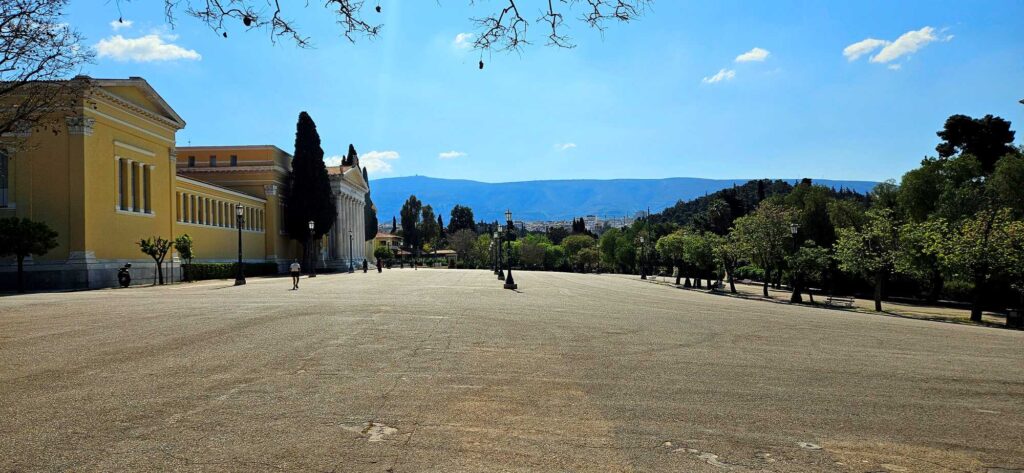
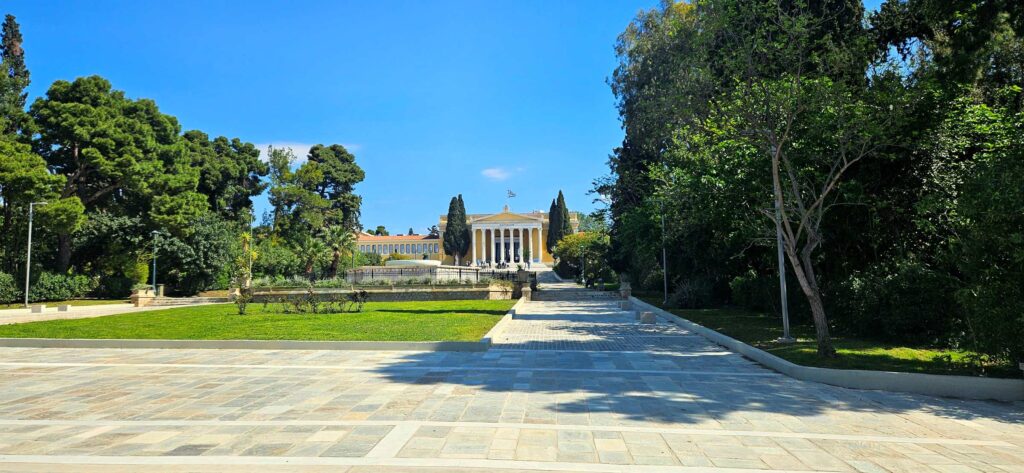
Athens is abundant with public gardens. Visiting the Athens National Garden offers respite, shade from a sunny day, and natural greenery. These gardens are open to the public, free entrance, and can be enjoyed solo, with family, with pets, or with a partner. I believe every capital city should have at least one public garden that can offer an escape from the dense, urban congestions.
At the edge of Athens National Garden (photo copyright belongs to the author)
Along Athens National Garden (photo copyright belongs to the author)
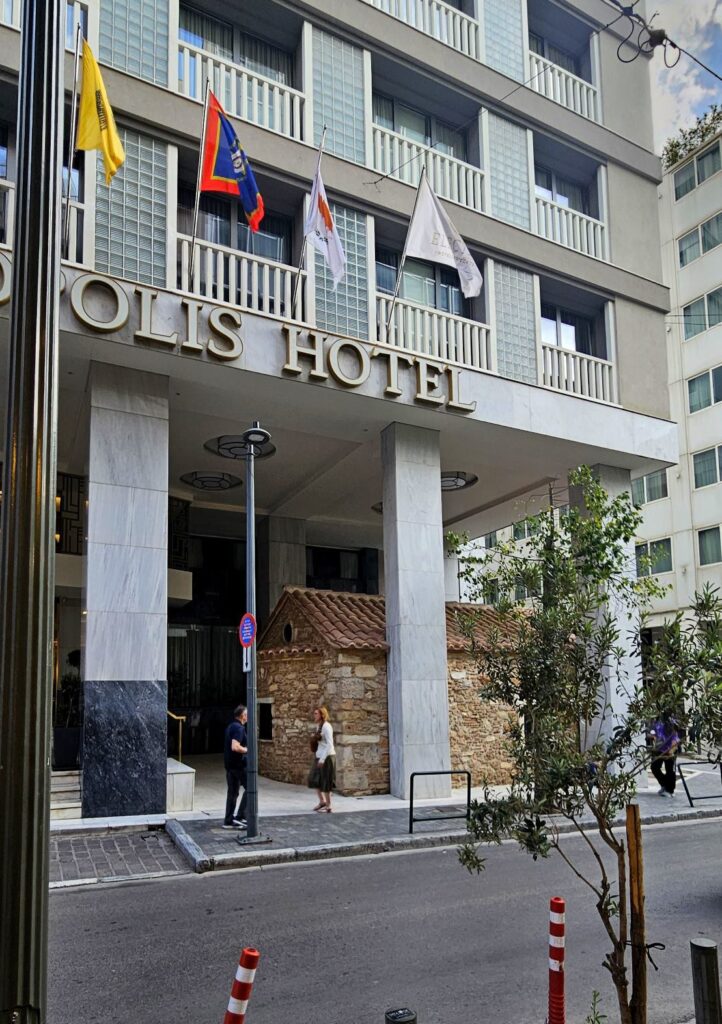
Finally, I want to conclude with this happy surprise (see photo below). A 16th century historic structure, the Church of Agia Dynami, was spared demolition, and the modern building [currently the Electra Metropolis Hotel] was simply built on top of it. It is a fine line between preservation and spatial intervention, but encountering many structures with obvious efforts to preserve them evokes the authenticity of the city and its deep ties to its roots.
Historic structure, preserved, under the Electra Metropolis Hotel (photo copyright belongs to the author)
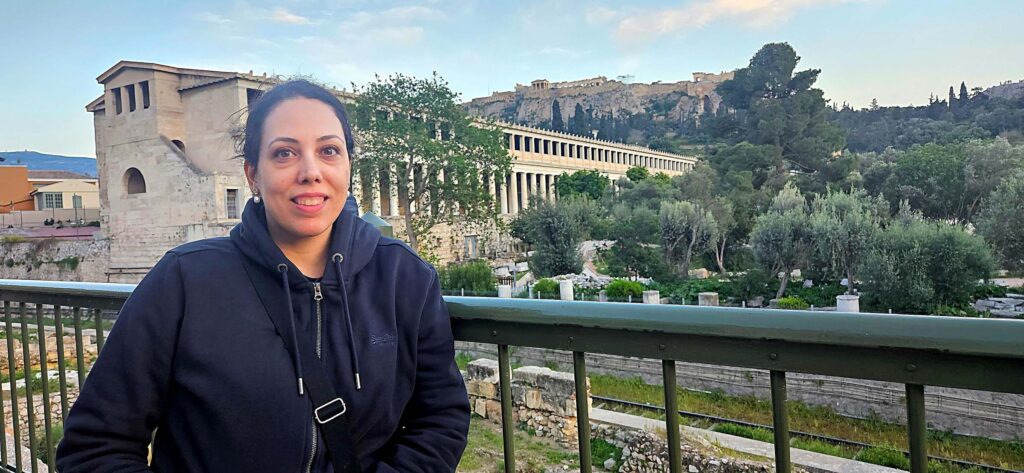
The author Maie El-Hage in front of the Stoa of Attalos (photo copyright belongs to the author)
Here I stand before the Stoa of Attalos. I hope you enjoyed this article. To see some reels and photos from my trip to Europe, I invite you to follow my Instagram channel here.
You may also like
Multidisciplinary Artist Daniel Canogar Links History to Contemporary Times
New media artist Daniel Canogar presents his latest show “Loose Threads” at Galloire Contemporar
A Scenographic Edition of the “House of the Milky Way” Project lands in Beirut by Antonello Ghezzi
Paolo Ghezzi conducted a “House of the Milky Way” project workshop at USJ Beirut thanks to the g
Ralph Hage’s art exhibition at Beit Beirut Museum gains international acclaim
Ralph Hage unveiled his art exhibition ‘Chronicle of Three Wars’ at Beit Beirut Museum on 10 Aug