The Eternal City: A Five-Day Art Historical Journey through Rome
Join me as I explore Rome in 5 days. From architecture and monuments to art, paintings and sculptures; the journey unfolds through the lens of an art historian.
(All photos are copyrighted, belonging to the author Maie El-Hage)
Since my undergraduate and postgraduate study days, Rome has always been one of the highlights of the art history courses. Hence, it was natural to visit Rome and see it for myself; through an art historian’s lens. I summarize my trip in this article into the 5 days I spent in the Eternal City, hoping to inspire you to make that journey yourself one day.
My trip took place in April 2026 in the turbulent Italian spring weather; the itinerary also coincided with both Natale di Roma and Italy Liberation Day. Not to stress; all my worries about the human traffic and road closures were quickly dispelled, as these two holidays turned out to be quite joyful and communal. Also to note, my stopover on my trip to Rome was Athens, and I invite you to read about my time in Athens here.
But now, let’s explore Rome together!
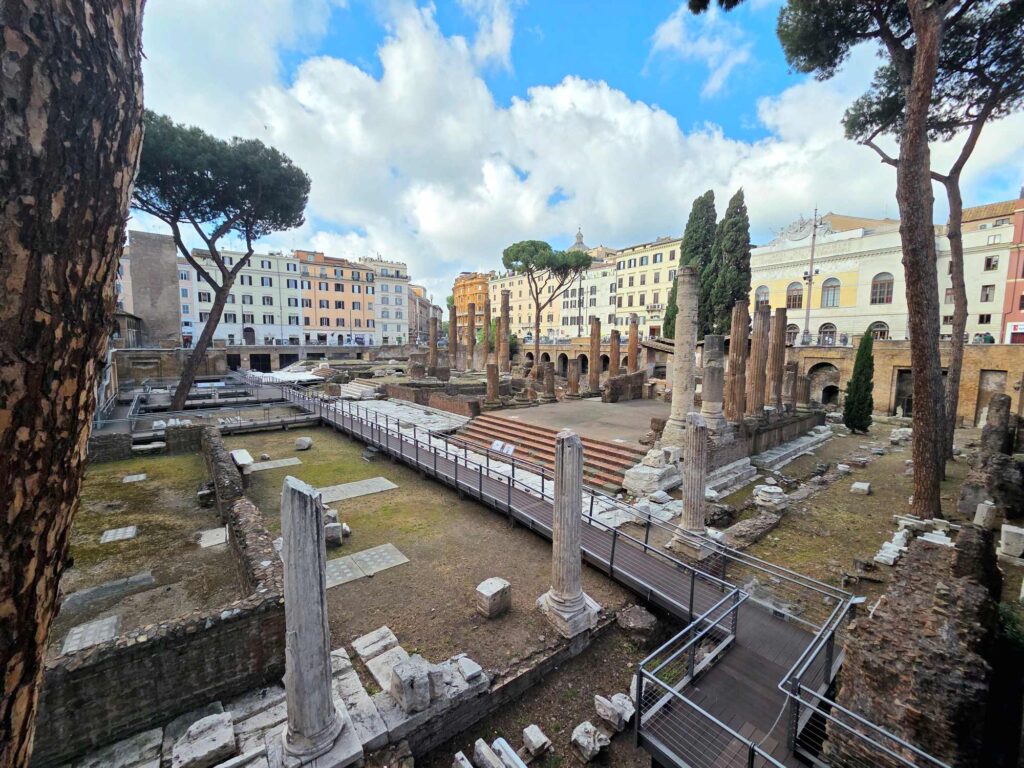
Largo di Torre Argentina (photo copyright belongs to the author)
Arrival, Day 1: Upon arrival, it was imperative to go for an evening stroll; to discover the area around the hotel and also establish an early sense of direction. I visited the Pantheon from the outside at evening time, but also was happy to discover Largo di Torre Argentina. This open-area archaeological site can be seen entirely from above; you don’t need to buy tickets unless you want to descend and stroll amongst the ruins. It features four Republican-era temples and the remains of Pompey’s Theatre. It is also quite stunning during the daytime. This evening, I also wanted to locate the Il Gesù Church and was glad to discover it was within walking distance.
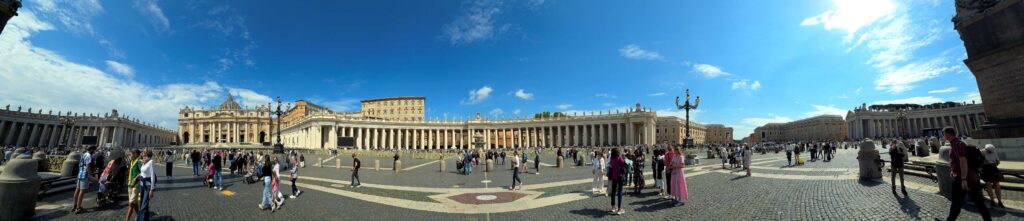
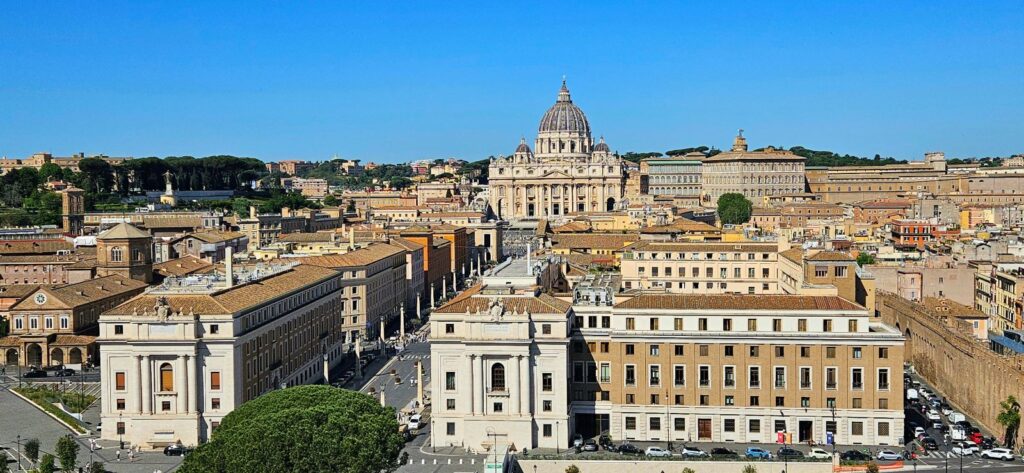
St Peter’s Piazza at the Vatican, panoramic view (photo copyright belongs to the author)
Day 2: At the Vatican!
The first destination was St Peter’s Basilica at St Peter’s Square. I made the mistake of not pre-booking a taxi, and could not secure any car transportation to the Vatican, so actually I had to make the journey on foot. I arrived just in time for my booking entry to St Peter’s Basilica. I very much advise you to book these tickets, including the entry to the Vatican museums, ahead of time as the lines are very long. I didn’t have to wait long in line at all.
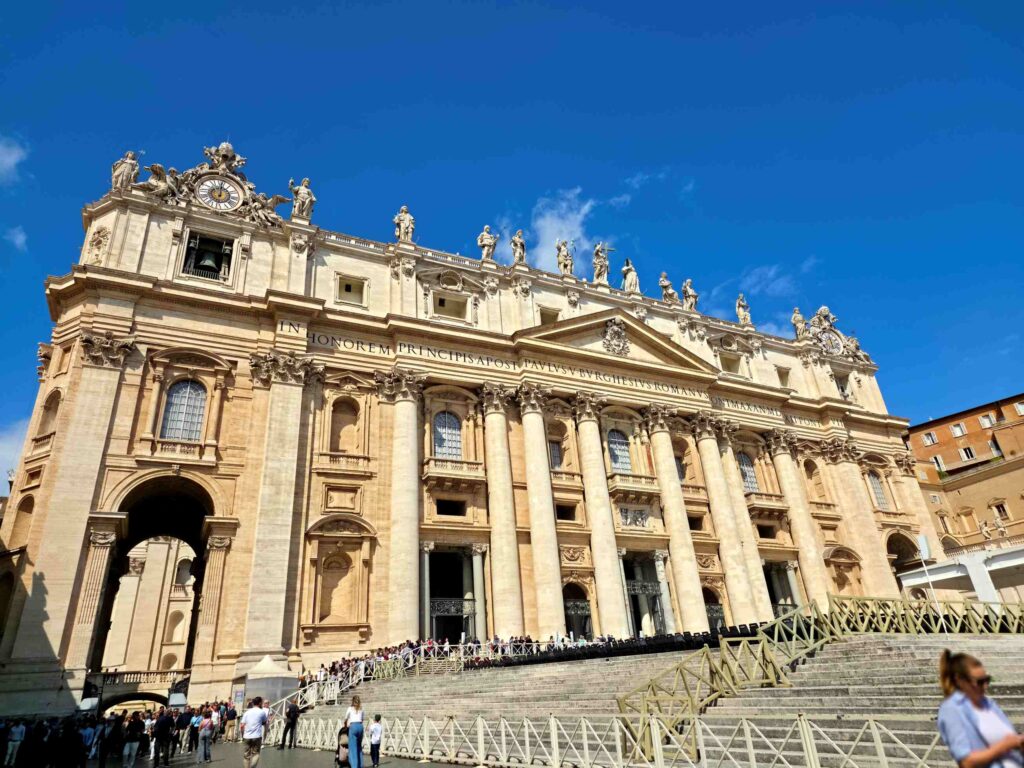
St Peter’s Basilica, exterior view, the Vatican (photo copyright belongs to the author)
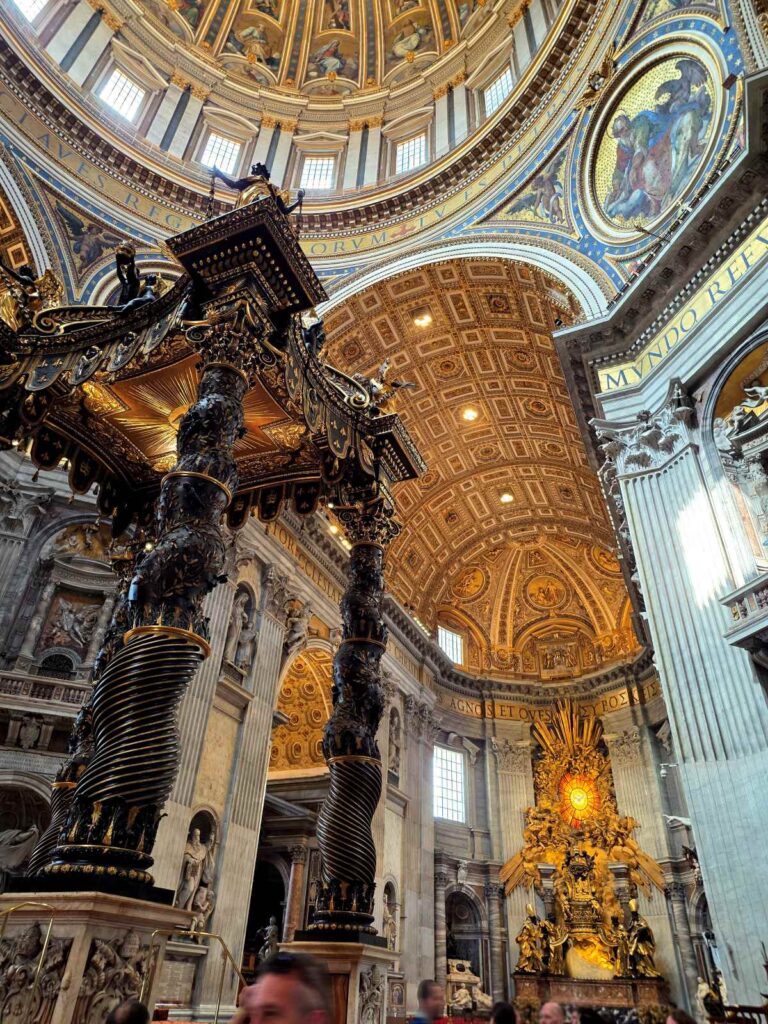
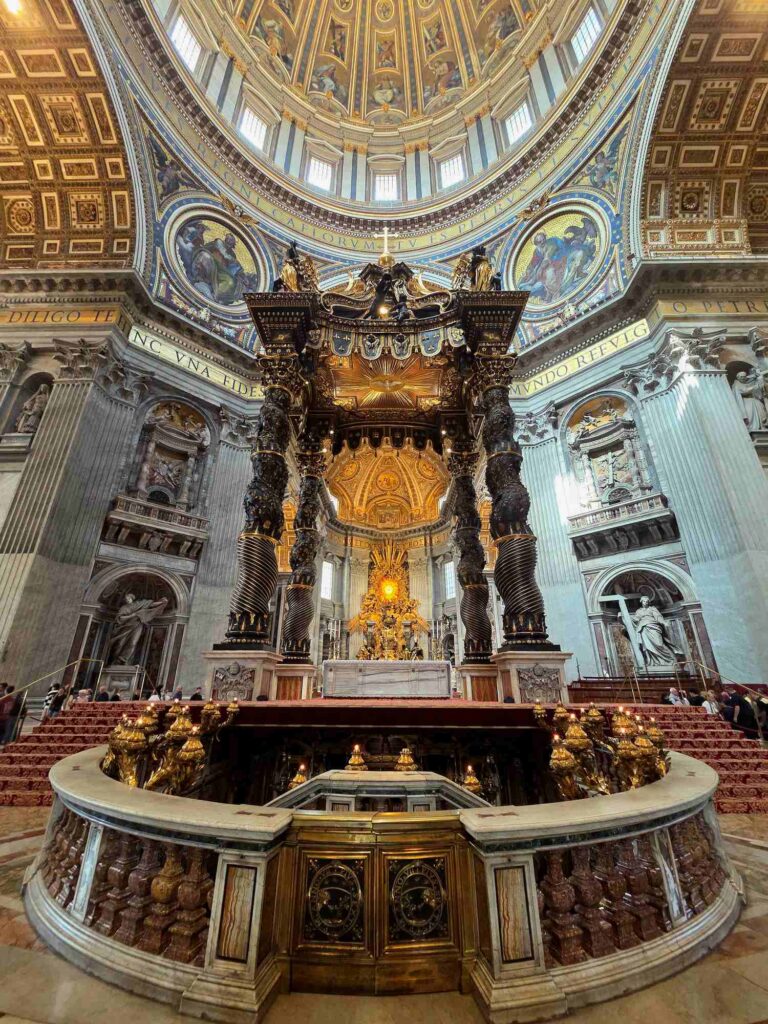
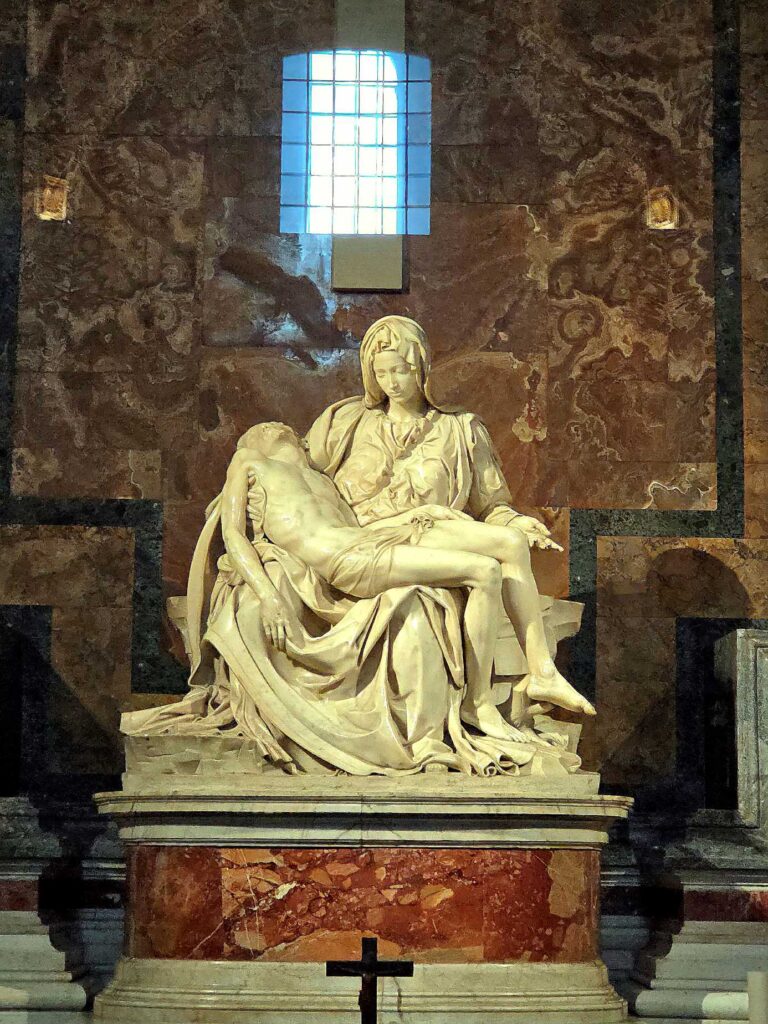
The Piazza itself is quite impressive. Of course, I had studied this site ahead of time, was familiar with the design, the architect Bernini, the scale; but being there was an experience in and of itself. Inside the Basilica of St Peter’s, there were two things that impressed me: the details, and the scale. The ceiling is so high, that the 30m high Baldacchino inside the structure itself seemed out of scale. Everywhere you look, there are gilding, frescoes, coffers… the building interior is not spare of detail anywhere. And of course, seeing the Baldacchino within the perimeter of St Peter’s throne was a glance at one of the most exuberant design moments in architectural/ art history. The Pietà, marble sculpture by Michelangelo of the Virgin Mary holding the crucified body of Jesus, is magnificent; however, because of its distance from the viewers and the large glass partition, it cannot be seen up close inside the Basilica, nor properly admired.
Baldacchino, side view, with St Peter’s throne in the background, inside St Peter’s Basilica, the Vatican (photo copyright belongs to the author)
Baldacchino, frontal view, inside St Peter’s Basilica, the Vatican (photo copyright belongs to the author)
Michelangelo’s Pietà, seen behind glass screen, inside St Peter’s Basilica, the Vatican
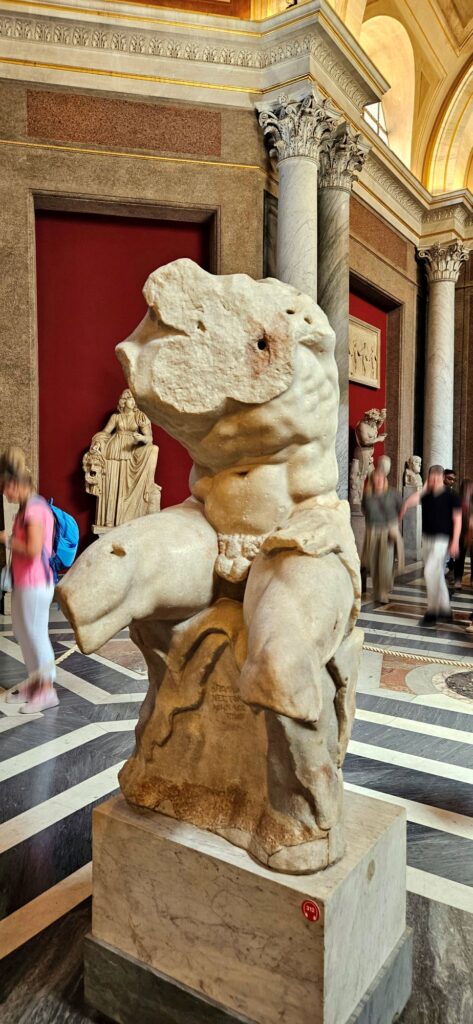
The infamous Belvedere Torso, inside the Vatican Museum
The Vatican Museum was the next stop. The journey is 7 kilometers of walking through different rooms and exhibition spaces, ending at the Sistine Chapel. At the latter, photography is forbidden. Seeing the Sistine Chapel was an experience I had been waiting for. The ceiling is much higher than I thought it would be; the position of Jesus on the wall with the Last Judgement was quite domineering. I just stared and stared; it took my breath away. About the other rooms, there was a hallway with some beautiful maps, there were museum spaces with ancient Egyptian artefacts, Mesopotamian objects and Roman and Greek sculptures. Of course, I saw the Belvedere Torso, a 1st century BC sculpture of a nude male figure with the limbs and head missing; this sculpture became a reference for future artists, including Michelangelo.
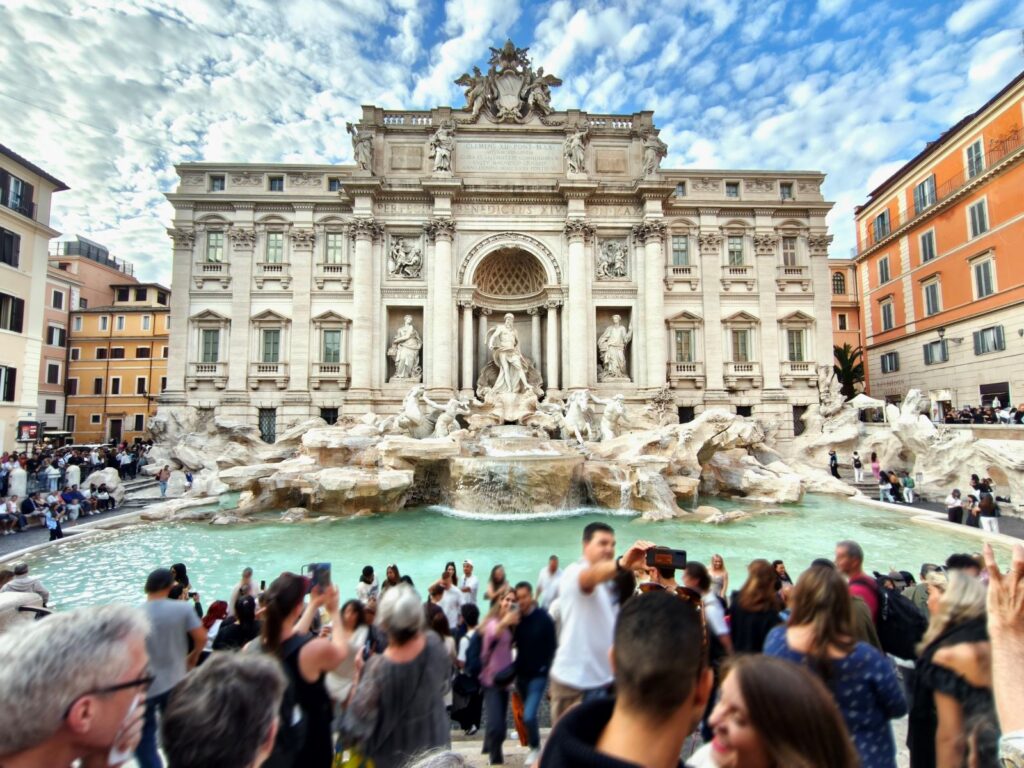
Crowds surrounding the Trevi fountain, Rome (photo copyright belongs to the author)
After the Vatican, I headed to the Trevi Fountain which was by far the most crowded space of all the sites I visited in Rome. It was difficult to get a good photograph, but I tried my best. I’ve read that the best time to visit the Trevi Fountain is at 5 o’clock in the morning, but that’s just something I wasn’t going to do.
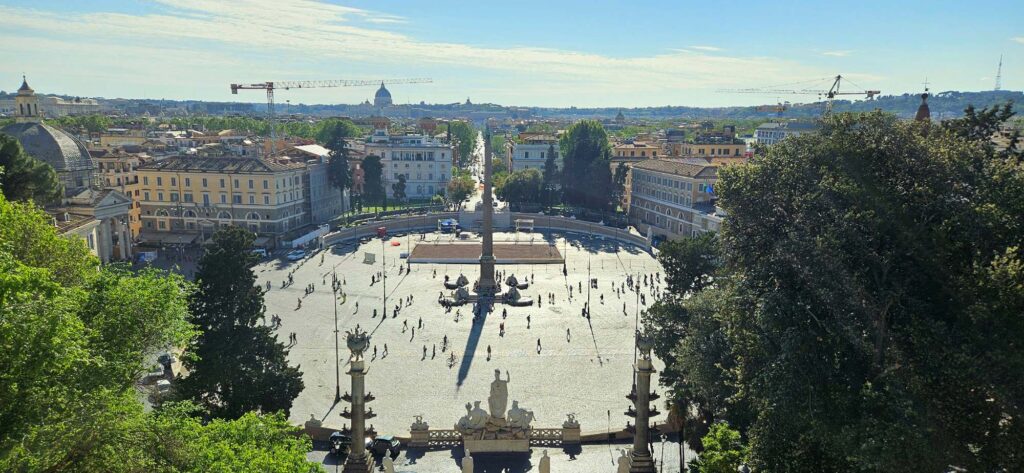
Villa Borghese is a beautiful, lush gardenscape. The best way to visit it is to hire one of the TukTuks for a ride to see all parts of the park, and that’s what I did. It was also so refreshing, because the sun was so strong. A note about Italian spring weather; when the sun is out and it’s hot, you will need to have just a T-shirt on, and once the sun goes back into the shade, it’s actually cold and you need a sweater. You also need a waterproof hoodie for when it rains. I was constantly shedding and re-wearing the sweater and, occasionally, the hoodie. Since Villa Borghese is at a higher level, the views were quite stunning including the view of Piazza del Popolo.
Piazza del Popolo, as seen from Villa Borghese Gardens (photo copyright belongs to the author)
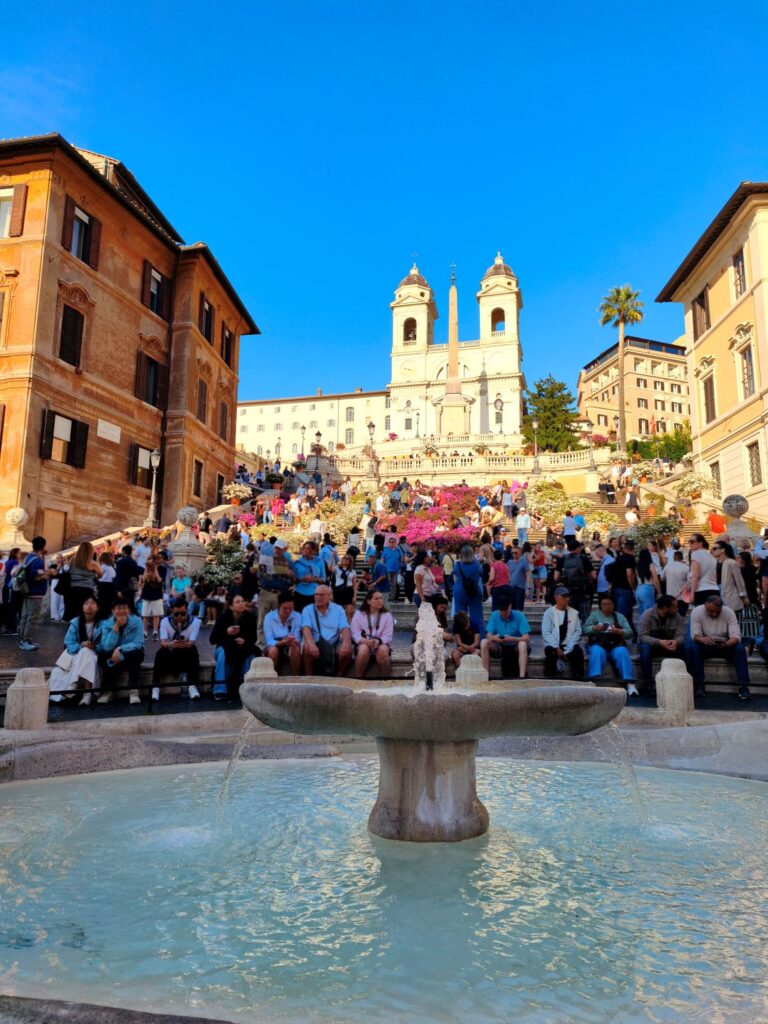
The Spanish Steps were also quite crowded. There is this rule supposedly forbidding sitting on the Spanish Steps, but everyone was there, seated. The steps take their name after their proximity to the Spanish Embassy to the Holy See. For me, it was a good respite, as I wanted to catch a break from a long day of walking. Afterwards, I ventured up and down the steps, taking photos. The décor at that time included flowers and bouquets which made it quite jovial.
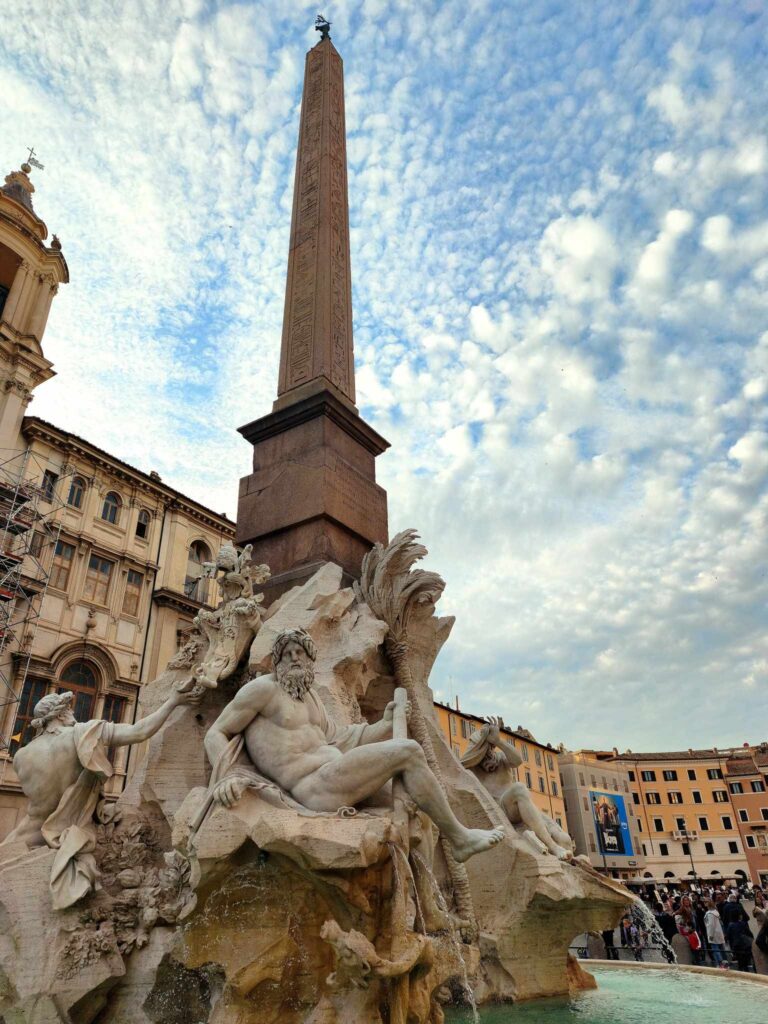
What I wanted to see at the Piazza Navona was Bernini’s Fountain of the Four Rivers; a beautiful sculptural fountain paying tribute to the longest then-known rivers of the world; the Nile, the Ganges, the Danube and the Rio de la Plata. The surrounding Baroque architecture was also quite impressive.
At the Spanish Steps, Rome (photo copyright belongs to the author)
Bernini’s fountain at the Piazza Navona (photo copyright belongs to the author)
Day 3: Natale di Roma
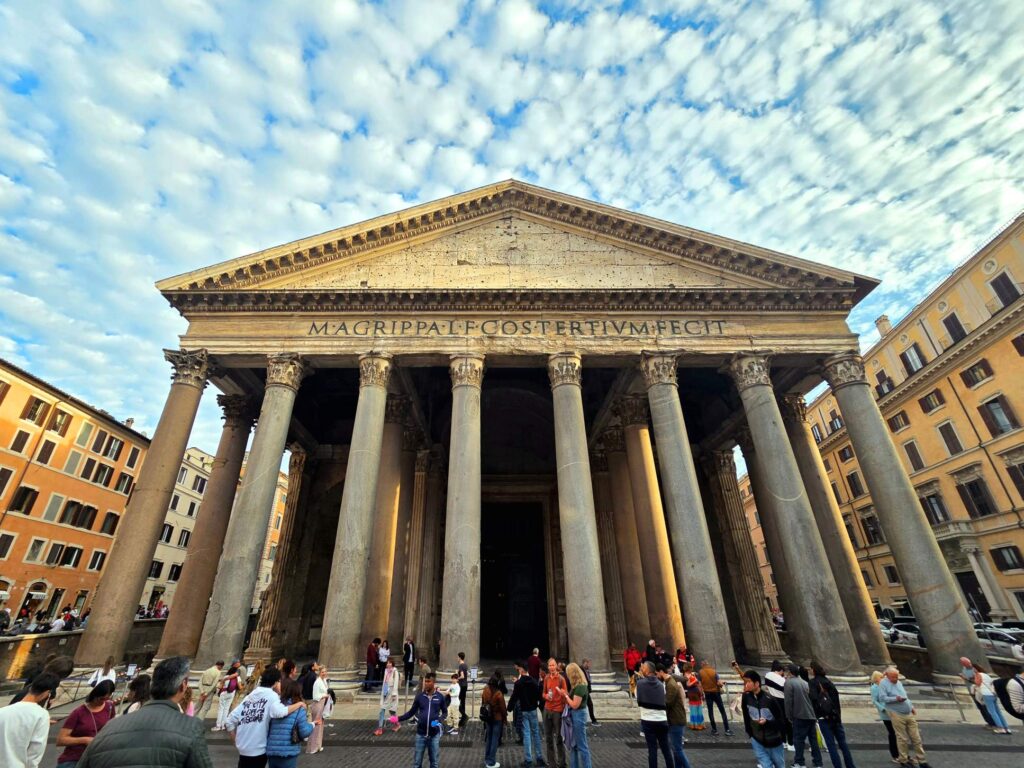
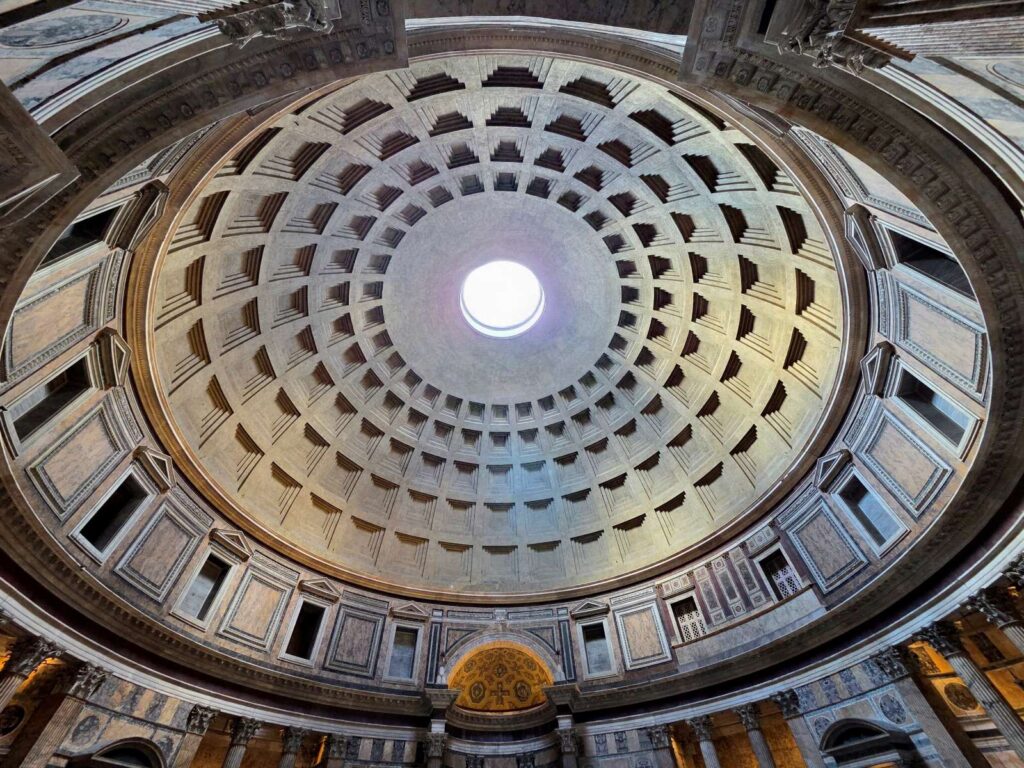
Natale di Roma, or birthday of the city of Rome, celebrates the founding of the city in the 8th century B.C. This was the day I had my Pantheon tickets booked via Get Your Guide*, and it was my first destination for the day. Obviously, I knew all the information about the monument’s introversion, why it was built, how and why it is an architectural feat, and the materials’ sources from all over the Roman Empire. Seeing the building was an entirely different experience than just reading about it. The sheer scale of the 43m high dome, the abundance of marble and stone materials used, the volume of the space, looking up into the oculus; there is so much to admire, and really I spent a little over an hour staring and taking pictures. The building is also to be valued for its structure, both from the inside and the outside. It is one of the best preserved ancient Roman buildings of all time, built in the 2nd century A.D. which makes it about a 1,900 year old building. That in and of itself is a feat.
*This is not an Ad.
Pantheon, exterior view (photo copyright belongs to the author)
Pantheon interior view (photo copyright belongs to the author)
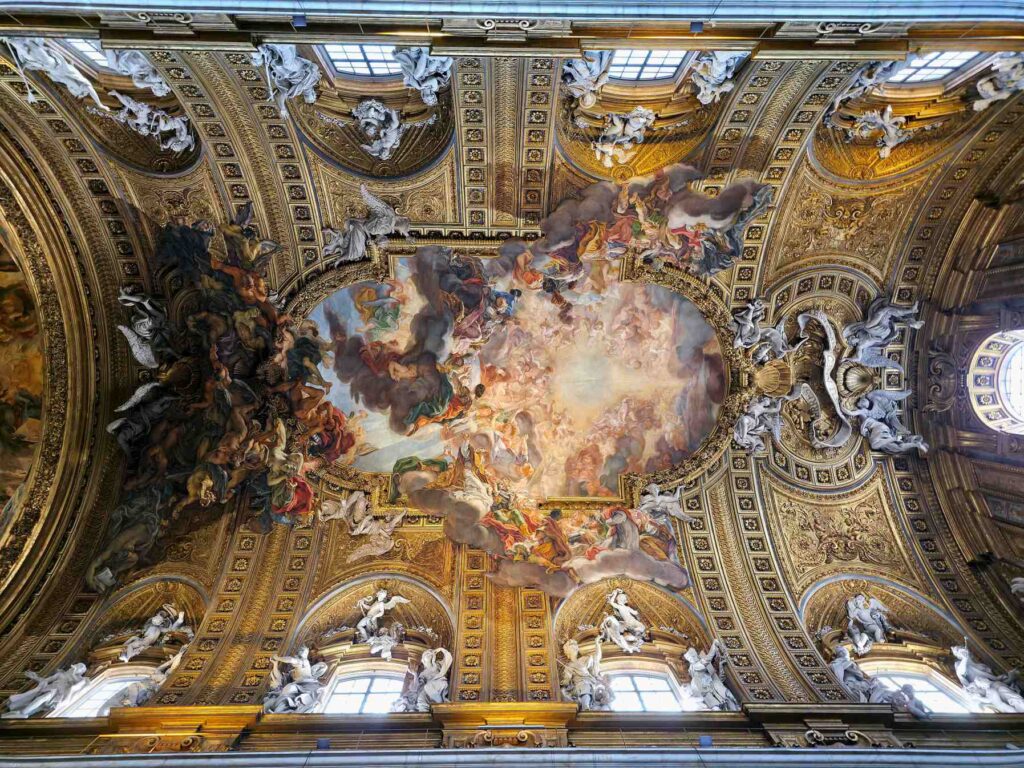
Next stop was Il Gesù church, the first Jesuit church. I have an entire class dedicated to this building, and I often challenge my students to recount its history accurately. The structure, commissioned by St Ignatius of Loyola and funded by Cardinal Farnese in the 16th century, had many designs submitted before the final design was chosen. Same goes for the design of the façade. The Baroque-era interior design was originally sober and spare; the current, exuberant ceiling frescoes were only painted in the 17th century by Gaulli. It features a fresco in the barrel vault titled ‘Triumph of the Name of Jesus’. I definitely recommend seeing this ceiling fresco, as it has many optical illusions. The concept is that there appears to be an opening in the vault (gilded by Gaulli), in which the elect rise to the heavens and the damned fall to hell. It is quite 3-dimensional, as Gaulli also used wooden panels and stucco, which he painted over, in order to generate this 3D effect.
Ceiling art by Gaulli, inside the Il Gesù Church (photo copyright belongs to the author)
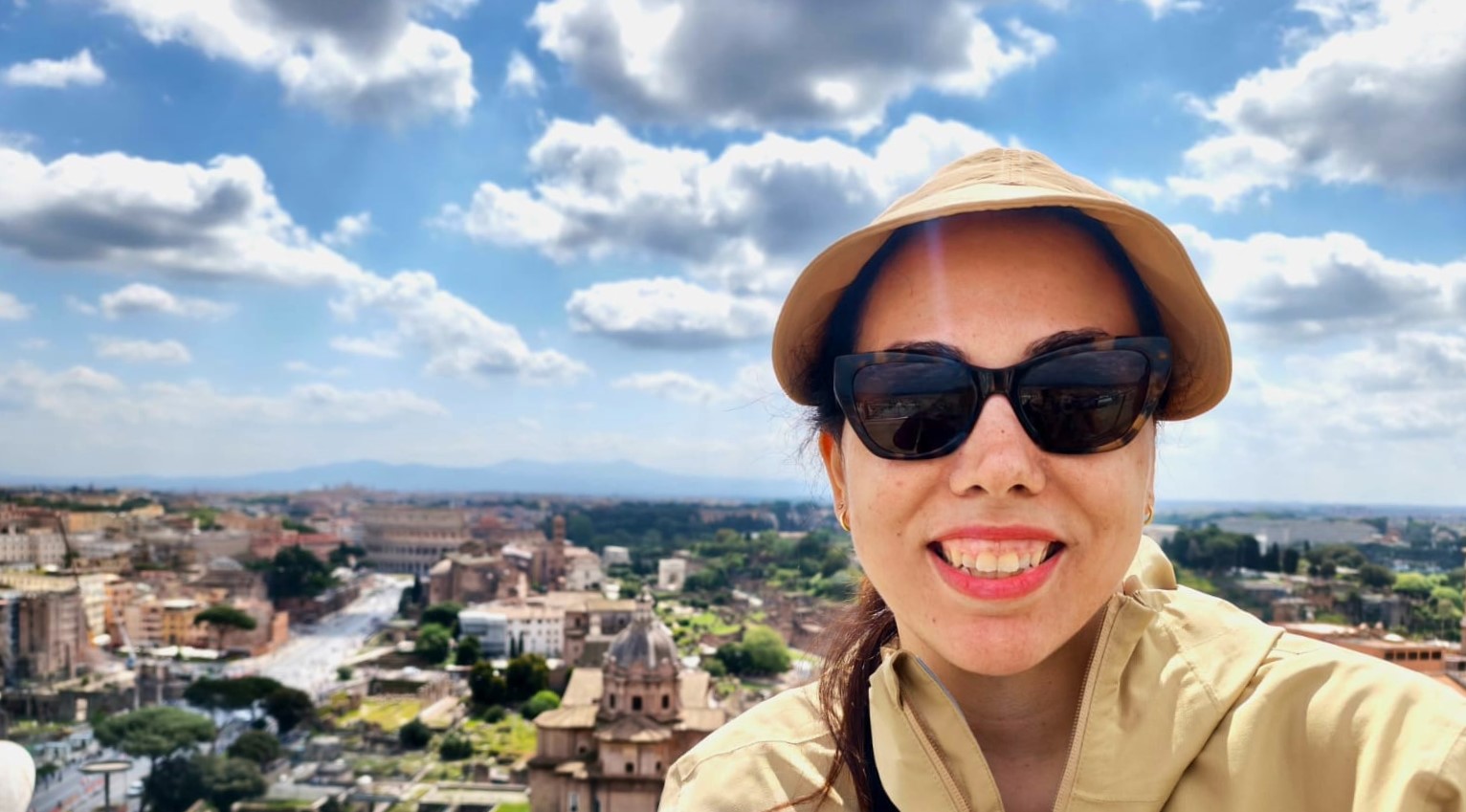
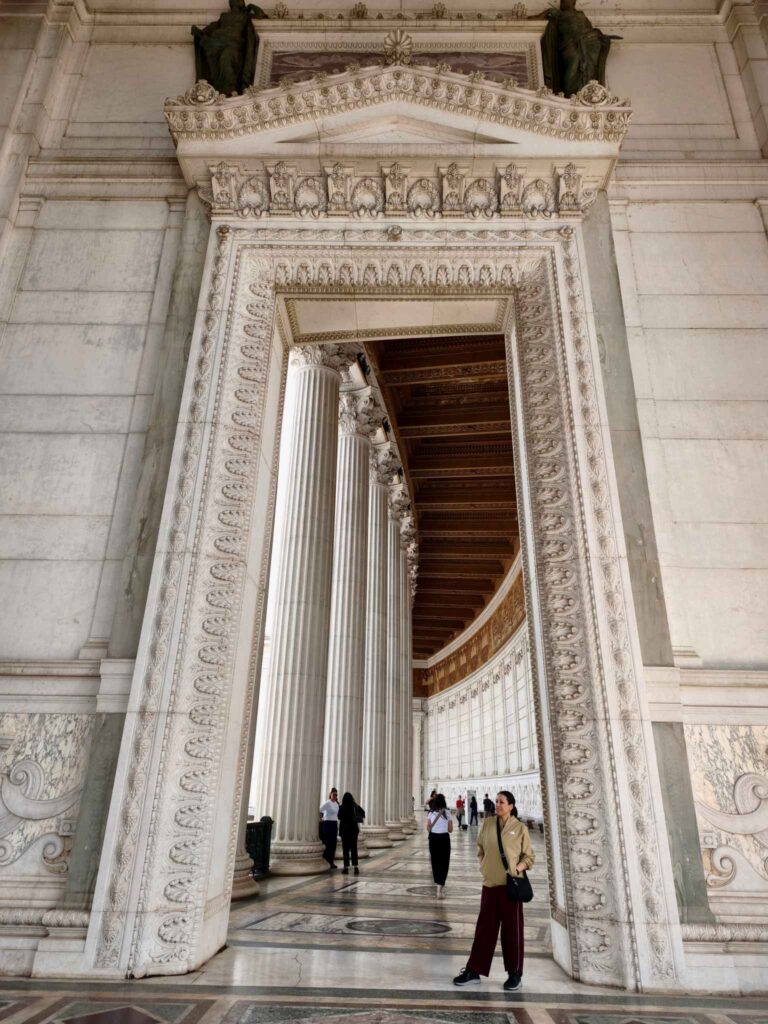
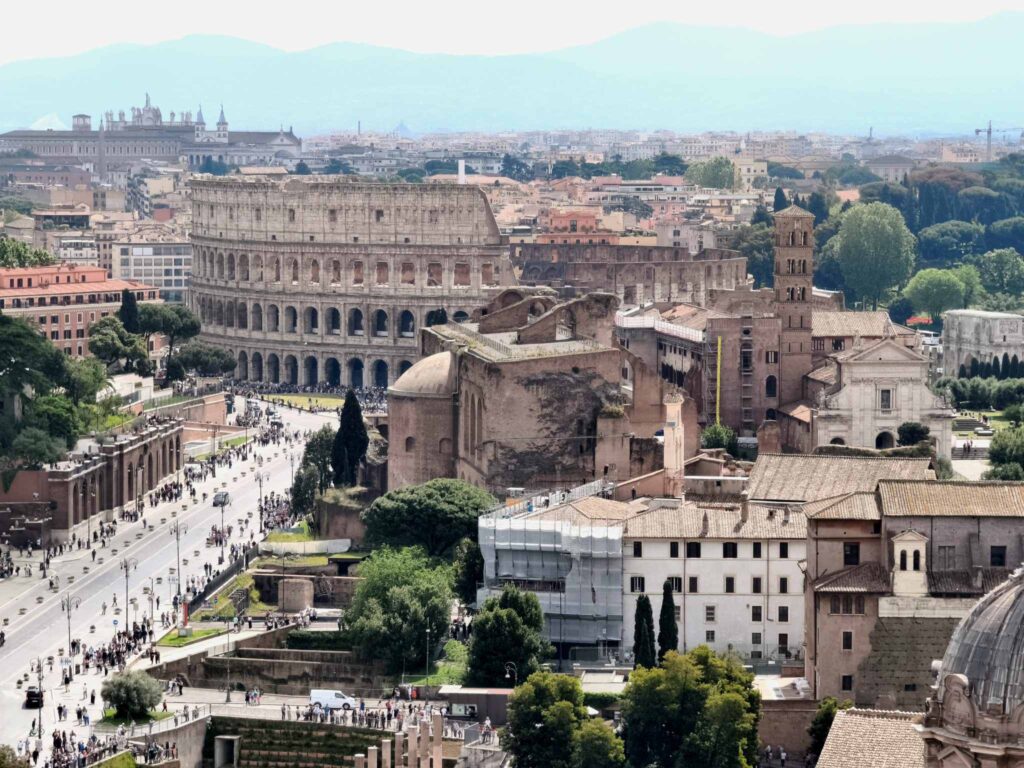
The following journey was to the Monument to Victor Emmanuel II. This spectacular Neoclassical structure is a great place for instagrammable photos, both of the various, monumental spaces and colonnades, and of the views to the city of Rome. This is where I really got to see Rome from above; a city with many layers of history, both ancient and Renaissance-era. The vista views to the Colosseum are also quite spectacular from here. I could also see the Museo di fori Imperiali and the Museo del foro Romano from here. Make sure to go to the highest vantage point via the elevator in order to witness these views. There are also galleries inside with artworks, including the portrait of Victor Emmanuel II himself, the first King of Italy in the 19th century. I had lunch at the nearby Piazza Venezia after visiting one of the secret gardens.
The author Maie El-Hage at the Monument to Victor Emmanuel II (photo copyright belongs to the author)
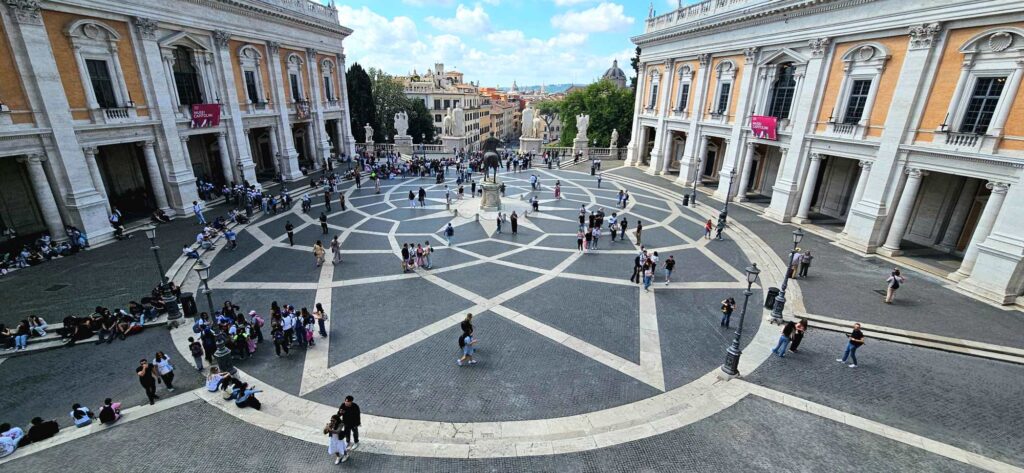
Piazza del Campidoglio at Capitoline Hill (photo copyright belongs to the author)
The journey on foot led me to the Capitoline Hill. I specifically wanted to see the Piazza del Campidoglio from above, as I had drawn on AutoCAD the pattern designed by Michelangelo himself (back in my time as a junior architect). The Piazza is quite nice, and the Capitoline Museum is definitely worth visiting.
I decided to spend the afternoon at Trastavere; this was far from my location, so I went there via taxi. Trastavere has its own appeal; it is very much trendy and bohemian, and I found lovely souvenirs made by artists there. I sat in a café to enjoy a coffee and some gelato, and went through my photos for the day.
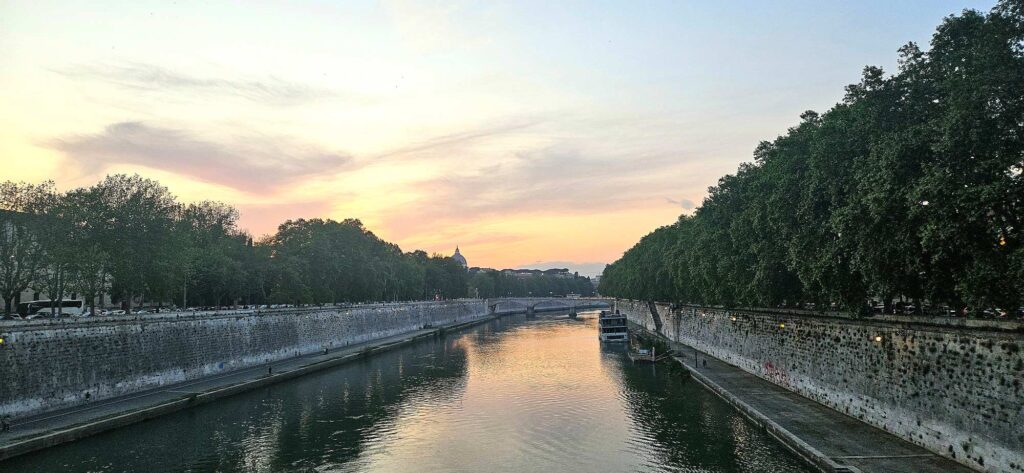
I ended the day with a sunset walk on one of the Ponte of the Tiber River, which was near the hotel. It was quite nice; there were live musical performances, couples and friends walking and chatting, and the reflection of the sunset on the water body was quite dreamy.
Tiber River, sunset views (photo copyright belongs to the author)
Day 4: Colosseum
The Colosseum was another highlight of the trip, and I had pre-booked my tickets via Get Your Guide.* The tickets also included the Roman Forum and Palatine Hill. These Roman archeological sites really illustrate the life that the Romans had, two thousand (plus) years ago. The Roman Forum, with the remaining stone structures and colonnades, are where the public gathered, the orators spoke and the merchants dealt in commerce. The Palatine Hill, on the other hand, is the site of the emperor and wealthy aristocracy’s palaces and residences; it is even on higher ground, overlooking the Roman Forum.
*This is not an Ad.
Colosseum, as viewed from the Monument to Victor Emmanuel II (photo copyright belongs to the author)
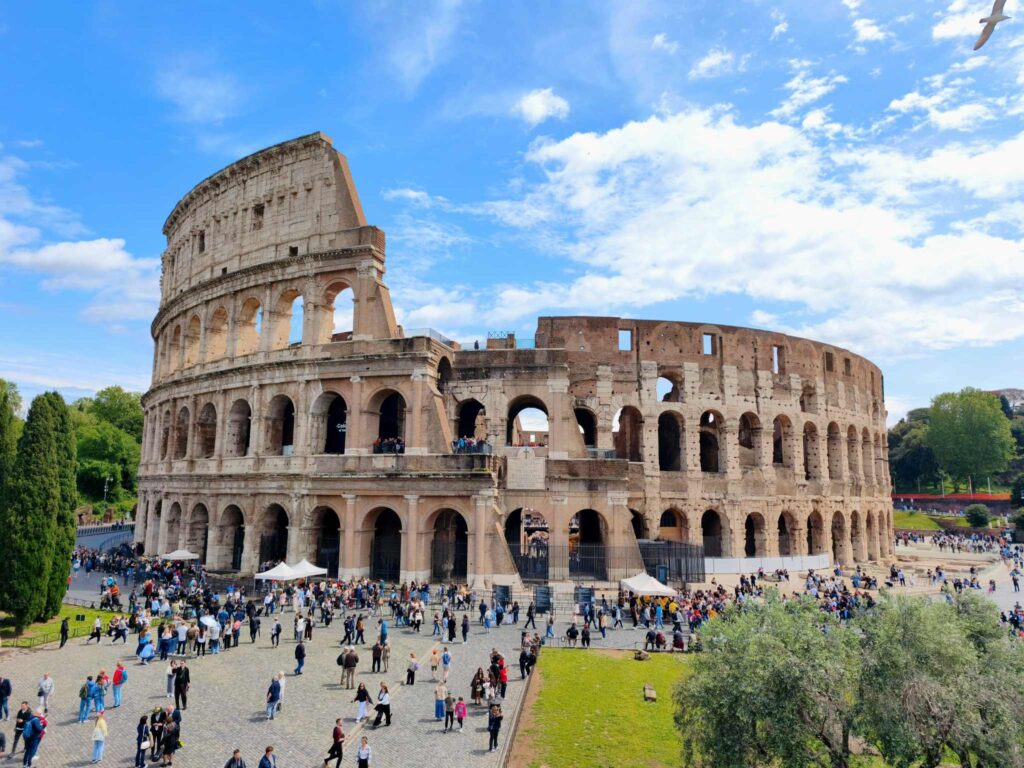
Colosseum a.k.a. Flavian’s Amphitheatre, exterior view (photo copyright belongs to the author)
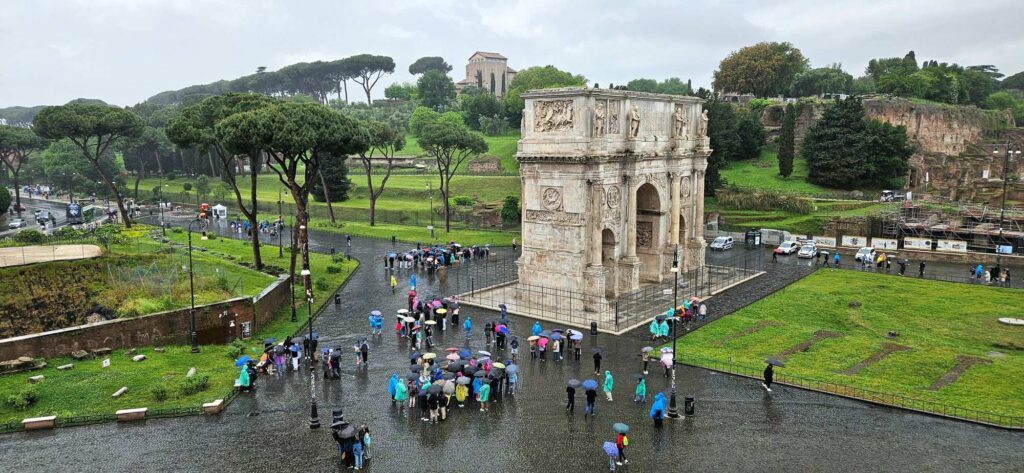
Arch of Constantine (photo copyright belongs to the author)
The Arch of Constantine is included in this tour; a triumphal arch from the 4th century AD, re-using roundels from previous monuments, in order to state the triumph of Constantine I. I have long wanted to see this monument up close, and I documented all the details, including the roundels and sculptural reliefs.
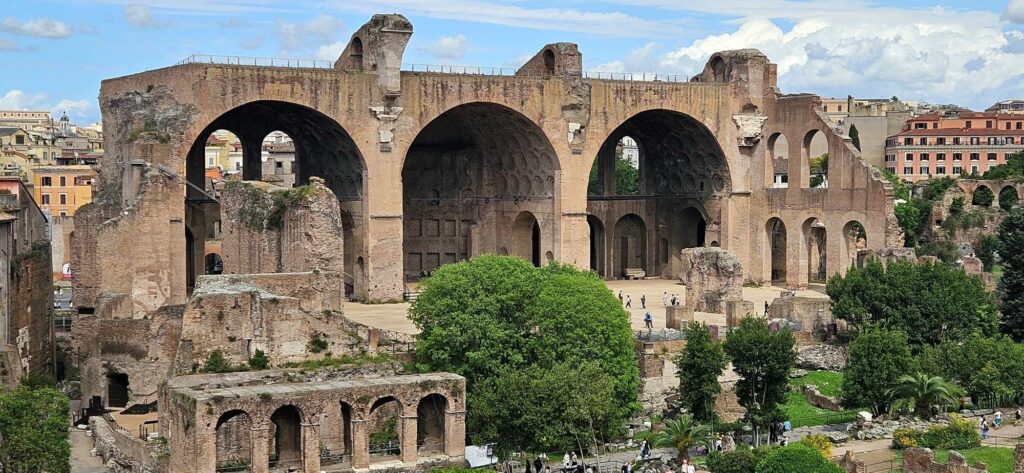
Another important monument is the Basilica of Maxentius and Constantine. I was able to walk within proximity of the barrel vaults, but also to look at it from afar. Its sheer scale is a testimony to the Romans’ early knowledge of concrete; a knowledge that was lost in time and rediscovered later. I enjoy teaching about this monument, because of the political maneuvering between these two Roman Augusti.
Basilica of Maxentius and Constantine (photo copyright belongs to the author)
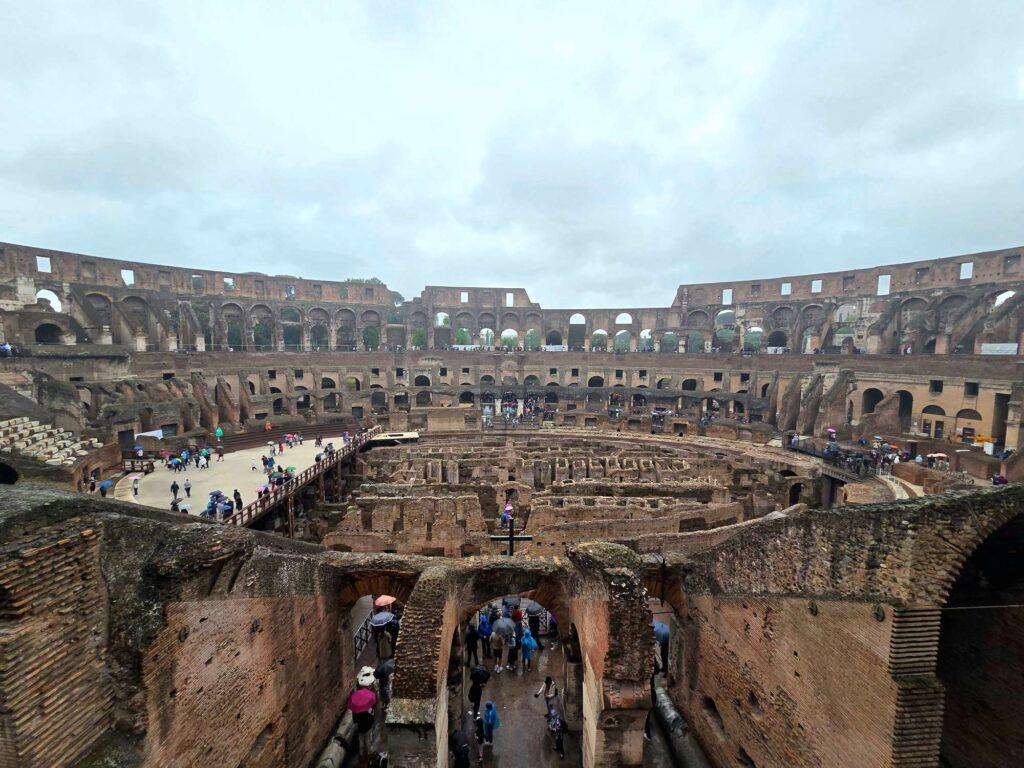
And now the Colosseum! By chance, it was a rainy day (at least when I was inside), but it didn’t matter. Flavian’s Amphitheatre is magnificent; the sheer volume of the travertine brick and concrete construction is overwhelming. At its prime, it could host 50,000 spectators; and this from a structure that is almost 2,000 years old. Looking down into the arena, where the battles or ‘sports’ took place, one is transported across time and could imagine how the Romans gathered to watch.
The rain stopped once I exited, and I was able to take photos from the outside from many locations on higher grounds. The day was mostly spent here, but after lunch I still had time to go and visit Piazza del Popolo (which I had previously photographed from above at Villa Borghese). The Piazza’s symmetry, with its buildings and obelisk, is quite scenic so I also spent time taking photos. Overall, it was a nice day.
Colosseum, looking into the arena, a rainy day (photo copyright belongs to the author)
Day 5: Final day
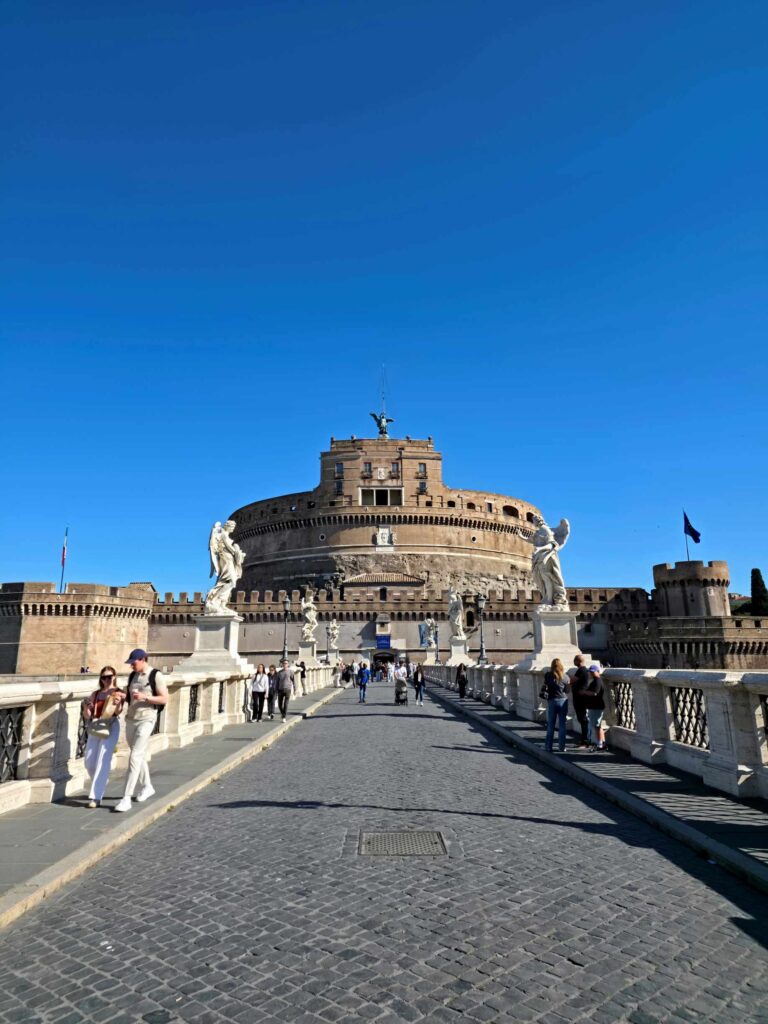
The weather was great and perfect for outdoor adventures! First stop was Castel Sant’Angelo, originally a mausoleum for Emperor Hadrian and his family, but later on used as a castle, a fortress and a high-security prison. The monument in itself is impressive, but I personally loved the exhibits inside, with paintings and engravings documenting the history of the monument. The views to the city were also breathtaking.
Castel Sant’Angelo, exterior view (photo copyright belongs to the author)
View to the Vatican from Castel Sant’Angelo (photo copyright belongs to the author)
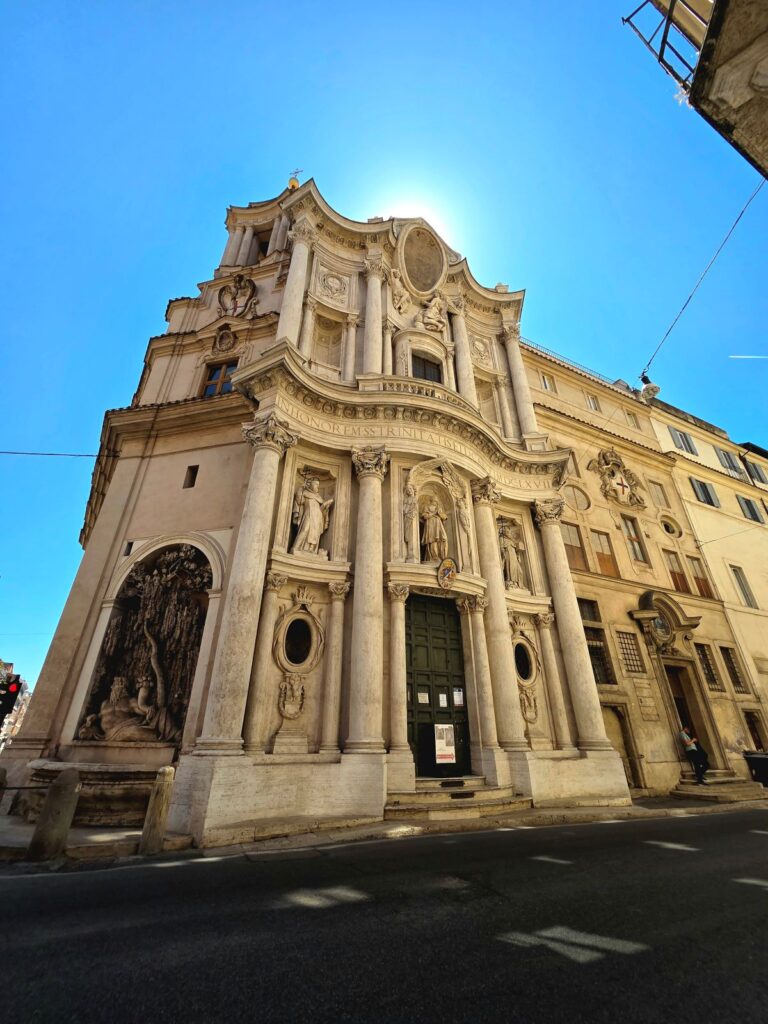
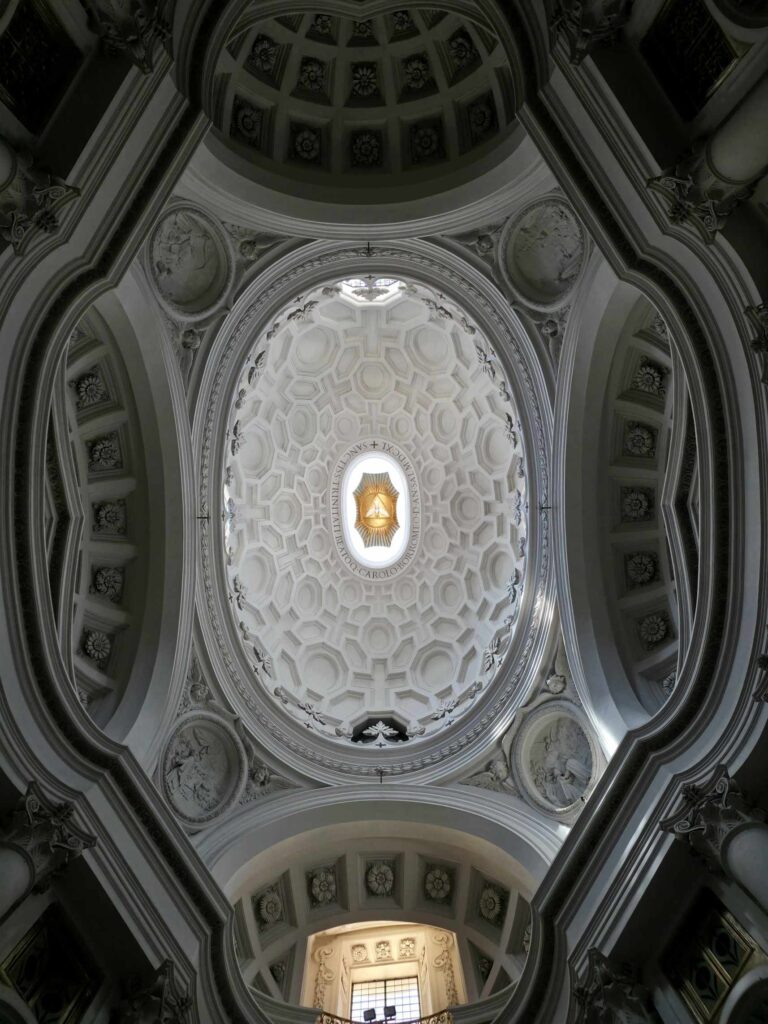
I chose to visit the church of San Carlo Alle Quattro Fontagne, the infamous Baroque church designed by Borromini. This particular church is so unique and spectacular in its design. The walls appear to be throbbing, undulating, with a curvilinear floor plan. The oval dome with coffers of multiple shapes appears to be inflating. I have spoken at length about this church in my Baroque Architecture lectures, so I had to see it for myself.
Church of San Carlo Alle Quattro Fontagne by Borromini, exterior view (photo copyright belongs to the author)
Church of San Carlo Alle Quattro Fontagne by Borromini, interior view showing dome (photo copyright belongs to the author)
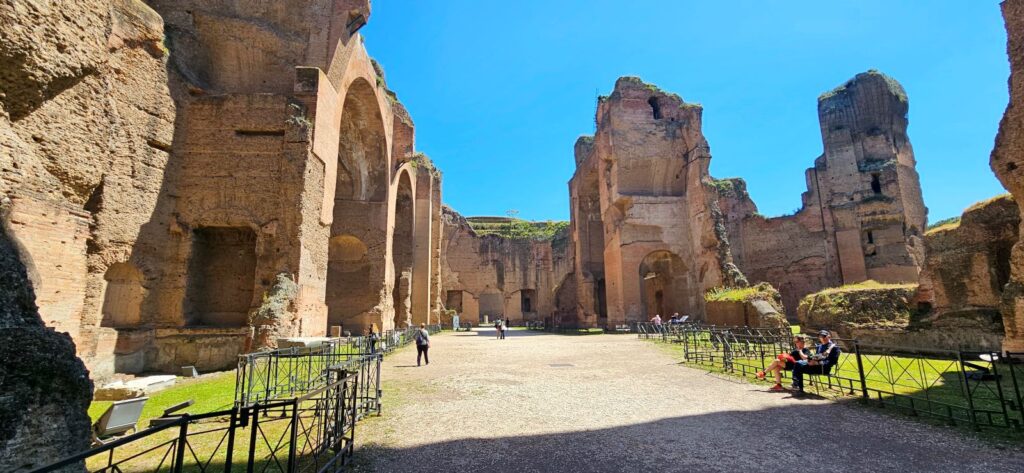
And finally, to take advantage of the good weather, I headed to the Baths of Caracalla, which were a bit far from the city centre. The landscaping of this ancient baths site is quite picturesque, and many families were strolling about. There are also installed pools, which help both cool off the temperature and also create a reflection in the water which looks great in photographs.
Baths of Caracalla (photo copyright belongs to the author)
Day 6: Italy Liberation Day
Rome was everything I dreamt and hoped it would be. A visual manifestation of years of research and study, I just took in all the splendor of the city. I understood history a little bit more, and got to experience for myself the scale of it, the details, the magnificence, the smell and the sounds… I left on Italy Liberation Day, and in my heart, I sent a little Thank you to beautiful Italy.
Thank you for reading. To see some reels and photos from Europe, I invite you to follow my instagram channel here.
You may also like
The 17th İstanbul Biennial is a Community-building Endeavor
The 17th İstanbul Biennial of 2022 offers 12 different venues, all woven within the urban fabric of
A Scenographic Edition of the “House of the Milky Way” Project lands in Beirut by Antonello Ghezzi
Paolo Ghezzi conducted a “House of the Milky Way” project workshop at USJ Beirut thanks to the g
Solo show by Isaac Chong Wai now on display at Zilberman Selected in İstanbul
“If we keep crying, we will go blind” by Isaac Chong Wai is currently on display at Zilberman Se